
The decs have come down, the mountain of chocolate is finally starting to disappear, and the return to work starts looming. These are the vibes of a new year, one we always hope will be better than the last. Now you’ll see January sales, workout videos appearing on Netflix, and healthy eating promotions as people work towards New Year, New Me.
I’ve seen a lot of posts recently with sentiments like, ‘you don’t need to set resolutions, you’re good just as you are’, and for some people that’s obviously a good message of self-acceptance. But for some, including me, setting rules, goals and challenges at the beginning of the year is motivational – it gives me a constraint to work within rather than floundering through life on procrastination. Getting into the mindset of embracing change and positive attitude can make a world of difference – even if it only lasts until February.
So what better time to start spring cleaning? And I don’t just mean the house. Reducing clutter from our lives has proven benefits for our mental health, ensuring we’re less anxious, more positive, and more productive. So whether you’re into setting resolutions or not, these five spring cleans will help clear the clutter (both physical and digital), which should help you feel altogether a little more ready for the new year ahead – while also reducing your emissions.
1. Clear your inbox
I know many of you will have just shuddered at being reminded of the 10,892 emails screaming at you to be opened – but there is a way to make it go away! Chances are you probably don’t need to read those ASOS sale emails from 2019, so you can probably blanket delete everything up to a year old, or maybe even further!
My tip would be to have a quick scroll through them, or use your mail’s search function to find emails from important sources – any contracts or sales confirmations and the like which might be useful in the future, and to put them in a separate folder in your inbox. Then just hit delete on your main inbox. It’s one of the few anxieties in life where you can simply press a button and make it all go away!
Before you do this though, make a note of all the senders in your inbox – all the retailers you signed up to for 10% off your first order and so on. Then right at the bottom of each email should be a message about unsubscribing:

Click it, and reduce the number of emails you’ll receive this year! (Perhaps worth noting that unsubscribing only means you don’t get emails anymore, you’ll still have accounts with those companies if you’ve made them).
This is a monotonous task, but worthwhile. The average email causes approximately 0.03-26g CO2e, depending on whether it has images and attachments. This may seem quite a low amount, but have a look again at the thousands of emails in your inbox alone. Imagine all the companies in the world with e-newsletters and updates, sending emails out to all their subscribers at once.
In 2019, email caused approximately 0.3% of the world’s entire carbon footprint. That’s huge. And our nonchalance around digital waste is only going to make that keep increasing. Loading in all those emails every time you check your inbox will also have a carbon cost, as it requires more data storage and energy to retrieve them.
So in short, clean out your digital spaces and take prevention efforts to reduce future emails coming in. Imagine only getting a notification from important or exciting emails! What a world!
If you wanted to take this spring clean even further, take the list of email senders you made and start deleting accounts you no longer use. You can get in touch with these businesses and ask them to completely wipe your information from their records, which they are legally obliged to respond to within one calendar month. This can also reduce the chance of your personal data being leaked and spam emails reaching you.
2. Research for future purchases
The hardest thing about trying to live a more sustainable lifestyle is considering every element that goes into making something. It’s no good just thinking about the plastic bottle your shampoo comes in. You need to consider the individual ingredients that make the shampoo – how much water and energy do they take to grow? Is that energy from a sustainable source? Was the land used to grow them once rainforest and cleared to make way for the plantation? Was fertiliser used? How were they transported to the place of manufacturing? Is the place of manufacturing in the same country as you? It goes on…
Knowing all of this for everything we buy is literally impossible. The only way to have some semblance of an idea about the true impact of the products we’re buying is to do our research. Some wonderful companies are explicit about this sort of thing. Others are shady, or only tell you small truths. It might seem a safe bet to buy a cardigan made of recycled plastic bottles, but what if that company is causing far more damage with their other products that it overshadows that one good decision?
A general rule of thumb is that the smaller a business is, the more likely it will be more sustainable. Many will simply care more about their products as the business will be their passion project. They are also more likely to use locally sourced ingredients, and because they’re working to a much smaller scale (often handcrafting), they will cause far less negative impact.
So while we’re throwing off the sleepiness of the Christmas holidays, pick a brand or product that you use – be it from your shower gel, baked beans, your skinny jeans, anything you’ve bought – and google the specific brand’s sustainability. You might be pleasantly surprised, or you might be sufficiently horrified. Here are some things to look out for:
- Country of origin – look for where the product is made. If it’s a food product you can normally Google the mode of transport usually used to import it into the UK. Planes are by far the most polluting method.
- Ingredients
- Where are the ingredients from? You may struggle to find this out for every ingredient, but you can use common sense to know we can’t get things like mangoes in the UK without a greenhouse or without overseas transport! Read more about UK food seasonality.
- Combine this factor with the country of origin – do they ship all the ingredients from several countries to the factory location before it then gets sent to you?
- Be especially on the lookout for palm oil – this is a major cause of deforestation and should be avoided as much as possible. It’s totally unnecessary as there are several alternative ingredients that other products use. I’m looking at you, Tesco Plant Chef range!
- Energy use – this one’s a toughie, but some companies do talk about it! Water use is a big one – did you know that it takes 10,000 litres of water to grow enough cotton to make a single pair of jeans?
- Sustainability policy – every company should have one on their website. Whether the brand truly cares often comes through in the tone of voice. Are they apologetic that they’re not carbon neutral, but talk in depth about the smaller scale things that they’re doing? Sometimes this attitude is better than big, vague statements.

If it turns out the brand you’ve been using ain’t so great, don’t freak out. If it’s a consumable, make sure to use it up so that the carbon cost isn’t wasted. If it’s something like furniture or clothing, ensure you get good use out of it!
Once you’ve discovered the rough carbon cost of your product, you can simply google ‘sustainable shampoos‘ or ‘eco-friendly toilet roll’ or ‘recycled T-shirts’ to find some better alternatives. Then next time you come round to buying that particular product, you’ll be well-informed and know what to look out for. You may need to shop around to find the perfect replacement product, but trying these new things can be quite fun!
3. Sort through your clothes
Chances are you just received a load of new, brightly coloured socks and a couple of jumpers off mum. Now’s a good opportunity to dig around at the back of your drawers for the Christmas 2016 jumpers you’ve not worn in as many years and donate them to charity. If clothes are made and not really worn, their carbon cost wasn’t worthwhile. According to the BBC, wearing an item of clothing more often for nine months longer can reduce its impact by a massive 20-30%.
And to touch on a sombre topic for a moment, those who were barely keeping a roof over their heads before the cost of living crisis are now likely homeless or close to being, despite having had jobs and mouths to feed. Those who couldn’t afford to heat their homes because of ridiculous heating bills may not even have a home to heat now.
You can donate your unwanted clothes to the Salvation Army clothing banks, Emmanuel House, and the Sharewear Clothing Scheme. There should also be plenty of local options if you Google it.
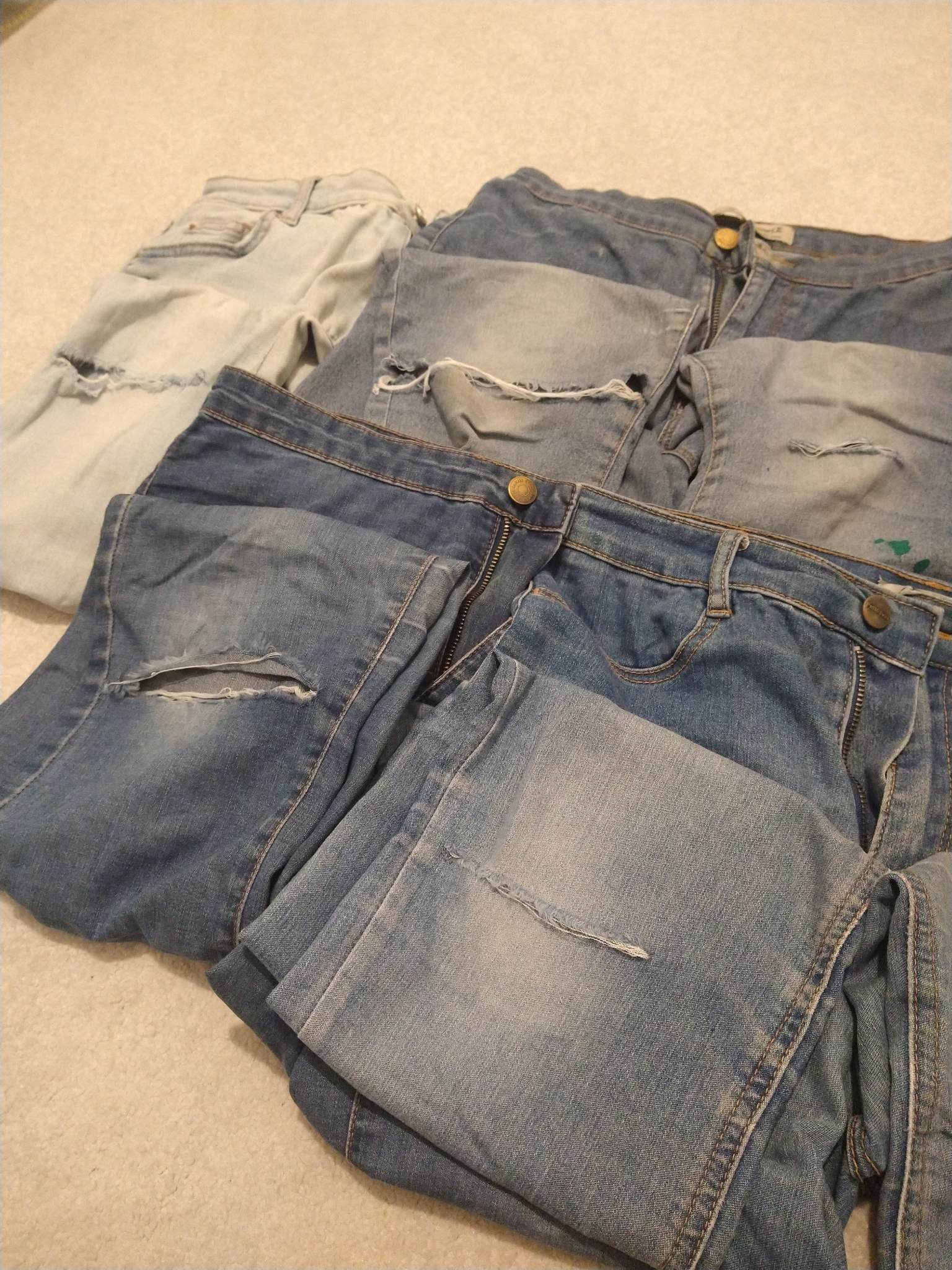
If there’s anything too threadbare or damaged to take to the charity shop, can you upcycle them? If you get unintentional ripped knees like I regularly do (see pic…), try cutting them off at the leg to make some new shorts, or perhaps you can put your seamstress skills to the test and make a new bag, a new outfit for a child’s bear, or even the bear itself?
Failing this, there are lots of easily accessible places that you can recycle old clothing, including Tesco and H&M. These will be taken as scrap material, meaning your faded old T-shirt can have a new life as sofa stuffing, new clothing, or even unexpected items like bricks!
4. Date check your food
I’m sure I speak for many people when I say I’ve eaten far too much this past month, and the thought of all the surplus sweets in the house makes my teeth ache.
Similar to not throwing out products if you discover that they cause high carbon emissions, sorting through the food you’ve got in the house means avoiding wasting the carbon cost of things you’ve already paid for. Our food counts towards a quarter of all global greenhouse gas emissions, with wasted food causing around 8% of that total.
You’re bound to have some excess veg or old bread from the Christmas period. Try Googling things like ‘recipes for leftover broccoli’ and see if anything inspires you. You might end up finding a recipe that you swear by every time you have a particular type of leftover! For us it’s homemade croutons from the ends of loaves – not only does this avoid waste, but they also taste far, far superior to shop-bought ones! Perfect for wintery soups.
If you have too many dry goods hiding at the backs of cupboards that you’re unlikely to use by their best before date, drop them off at a donation point. Several supermarkets offer these, as well as specific charities like Emmanuel House. It’s mad that we produce so much food waste while so many go hungry.
Either way though, it’s good to sort through your cupboards and fridge to see what needs using asap.
5. Energy checks
The new year is all about breaking old habits and starting better ones, so why not go around your house and switch off appliances at the wall. You’ll have heard this one in many a sustainable tips list, but it’s a good one, especially with the cost of energy at the moment. At the very least switch off the items you’re not using – the bullet blender you only use in January, the dead air freshener you haven’t replaced in months. It would be great to get in the habit of turning off all appliances, but this isn’t always practical, or can be scary in case your phone doesn’t charge so your alarm won’t go off.
If you need to, inform the husband or the housemates that this is how things are going to be around here from now on. They may grumble about it, but at the end of the day, it’s only an extra click to work the appliances, and if you passive aggressively switch plugs off at the wall until they get the message, it’ll eventually become second nature to everyone.
Now might also be a good time to look at the efficiencies of your electricals. You can buy a power meter for around £10-20, which you then plug your appliance into and see how many watts of electricity it takes to run.
There might be some maths involved in this, but it’s a good opportunity to see what may be using more energy than expected around the house, as well as costing you more money in a time where every penny counts. The Centre for Sustainable Energy has a really useful article which shows you the average power ratings and cost per 10 mins/1 hour of use, which you can base your findings on.
It may be that an appliance is horribly inefficient and wastes both energy money like a UK Track & Trace system. If that’s the case, by all means replace it, but remember that if it still works, others may have need of it. It may be that a small change can improve its efficiency – for instance, lamps will be more efficient with LED bulbs than halogen. Otherwise, take items to your local charity shop (make sure to check they accept electrical items first), or be sure to recycle them properly.
And that’s it! I hope you found these tips helpful and that they give you a cleaner, happier start to the year. Make the most of that fresh bout of motivation and give yourself a head start by decluttering. It’ll certainly save Future You from some needless stress and anxiety.
Happy new year!
 Ecoetry
Excellent post 👏🏻 I had no idea about how much emails contributed to our carbon foot print, and it was the push I need to unsubscribe to all those mailing lists and delete the 27 thousand emails I haven’t read 🤦🏼♀️ really good ideas and a nice clear, educational read 👍
LikeLiked by 1 person
Excellent read and some good tips! I had no idea about how much emails contributed to our carbon footprint. This article gave me the push I needed to finally delete the 27 thousand unread emails from mailing lists I’m no longer interested in, and finally unsubscribe to them all haha. Nice and clear read, very educational and helped me get motivated to declutter my digital life!
LikeLiked by 1 person
Honestly, comments like these make my day! 😍 knowing that even one person made a change based on these posts makes it all worthwhile! Thank you, hope your empty inbox has you smiling! 🌟
LikeLike