It’s hard to be a conscious shopper with the odds so stacked against you. You might base your buying decisions on words like ‘sustainable’ or ‘organic’ on the backs of packets, or even what you’ve read about how brands in the news. But then there’s damage to the environment growing ingredients, the company’s practices, history and ethics, their owners’ history and ethics, and all the same again for the suppliers a business works with, and much, much more.
To consider this for every single thing we buy is just not possible in our attention-drained lifetimes. It’s the same story as our politics – the old diversion technique. We’re so busy that we can’t consider every buying decision we make in full.
But we can veto certain brands off the bat. We know that the oil companies like Shell and BP are outright bad for the planet, although somewhat unavoidable for drivers. Many know about Nestle’s impact too, so we can just avoid products with those big names on it. Right?
Of course, it’s not that simple.
Here are some of the brands you may not have known were owned by bigger companies with not-so-ethical backgrounds.
1. Costa Coffee
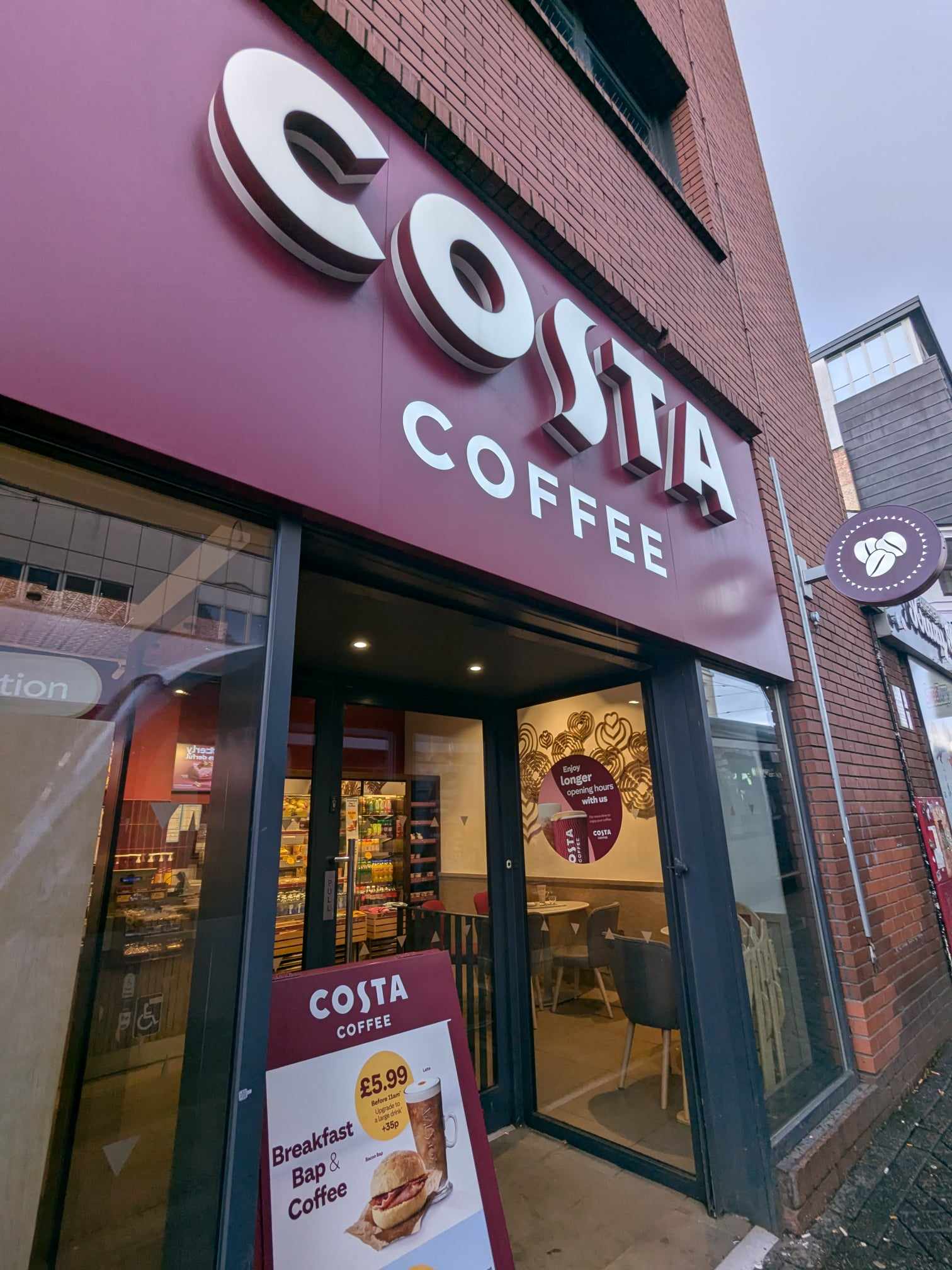
This one was a shock to me, but the café chain loved by grannies everywhere is actually owned by Coca-Cola.
More than 100 billion of their single use plastic bottles are wasted each year – just a fraction of the 3 million tonnes of waste caused by the Coca-Cola Company overall.
According to their website, they own over two hundred brands across the globe. Fifty-six of these brands are responsible for more than half of plastic pollution in the world (2022). Which makes total sense when you consider that they make 200,000 new bottles per minute.
Beyond the obvious plastic pollution issues, there have been numerous lawsuits and concerns over the years, ranging from animal testing (which they announced they ceased as late as 2007 – look up the story of the gorilla and the taste buds experiments, it’s awful) to racial discrimination cases and lobbying against recycling schemes across Europe. Not to mention the creation of their corn-based syrup being more carbon-intensive than other fizzy drinks, the allegations of depleting quality and quantity of water sources in third-world countries in their bottling processes, and allegedly using the South African Apartheid to their commercial advantage. Here’s a comprehensive list of their misgivings.
The Coca-Cola Company also owns:
- Appletiser
- Fanta
- Innocent Smoothies
- Powerade
- Schweppes
- Sprite
- Smartwater
- Vitamin Water
Alternative recommendations: There’s few suitable Coca-Cola replacements, but at least with coffee there’s an abundance of options. I’m more of a Cafe Nero girl when it comes to the chains, as their coffees are stronger and less milky. However, Nottingham has so many good independent coffee spots that I’ll only go to Nero if I’m on a time limit or the others are closed.
2. IMDb
Our go-to website while watching films and needing answers to the age-old question of ‘what do I know him from?’ has actually been owned by Amazon since the nineties. I’m sure we all know that Amazon’s bad for the planet and thus ironically named (all that next-day delivery and millions of products can’t come without cost), but here are the specifics.
Besides the packaging and emissions from their shipping, Amazon also shred hundreds of thousands of unsold and returned items, regardless of their usability. This adds to our e-waste and plastic waste crises, releases toxic chemicals, and wastes all the carbon emissions caused by making these products in the first place.
Despite their environmental pledges, Amazon’s emissions are skyrocketing faster than Bezos’ space dreams. In fact, their original ‘Shipment Zero’ pledge silently disappeared from the website – and their ambitions.
Amazon claim that their carbon emissions actually reduced 3% year-on-year by ‘matching’ their operations with 100% renewable energy. Sounds great. Until you consider that they’ve actually increased in emissions by 34% since their climate pledges in 2019. So rather than sorting the problems, they’re buying up solar and wind farms and investing in more to compensate for it.
There’s a bit of a lack of transparency in their reporting measures – they don’t include emissions from the product manufacturing. If they just sold third-party items, I’d understand this omission, but they have their own brands, and many products from overseas would never have been available without them – so they’re still to blame for a lot of it.
Their estimate emissions for 2022 were 68.82 million metric tons of CO2 equivalent, which is equal to emissions from the annual electricity use of 13.5 million houses, or the energy from over 18 million wind turbines working over an entire year (EPA carbon equivalent calculator). It’s also estimated by Oceana that up to 23.5 million tons of their plastic waste ended up in rivers and seas in 2020 – equivalent to dumping a van’s worth of plastic into the sea every 67 minutes. And that’s not considering the impact of their humongous warehouses and the land used.
You may wonder then what the implications of using IMDb are and how that benefits Amazon, and this is purely ad spend. You view the site, and companies pay Amazon to advertise to you there. But consider the below list and where you may be funding Amazon even further with their pollution.
Amazon also owns:
- Twitch
- The Washington Post (owned by Bezos, but still)
- Ring (doorbells etc)
- Goodreads
- Audible
Alternative recommendations: Nest or third-party can replace Ring products, and Rotten Tomatoes or Wikipedia can stand in for IMDb. Here are some alternatives to Audible too.
3. Purina
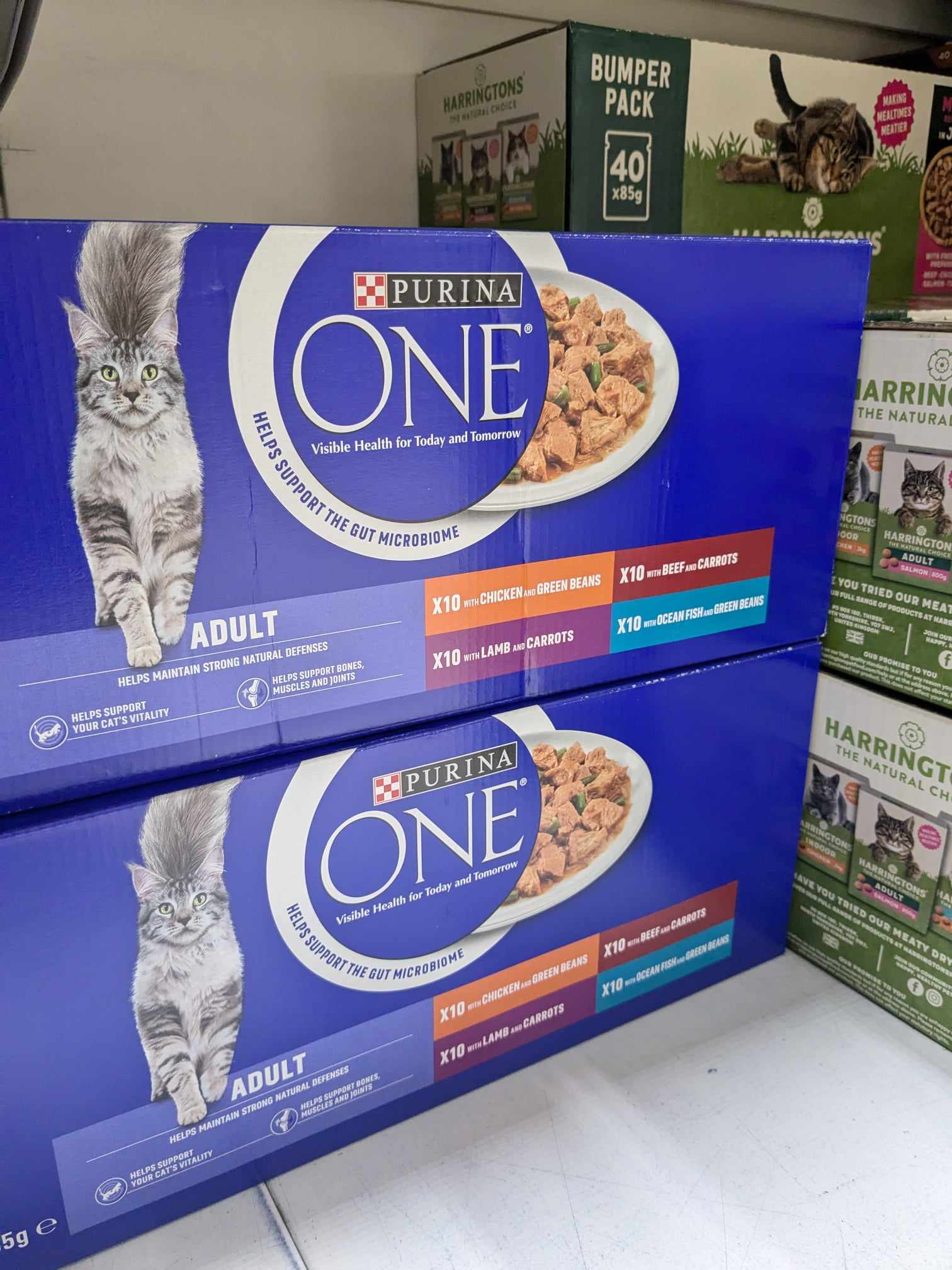
Even your pets aren’t safe.
I know I mentioned Nestle in the intro, but it’s the most common culprit of a Google in the supermarket that makes us groan when we discover a product is actually these guys again. Nestle own basically every brand in the supermarket, and everything else is pretty much owned by Mars, who also have their fair share of controversies.
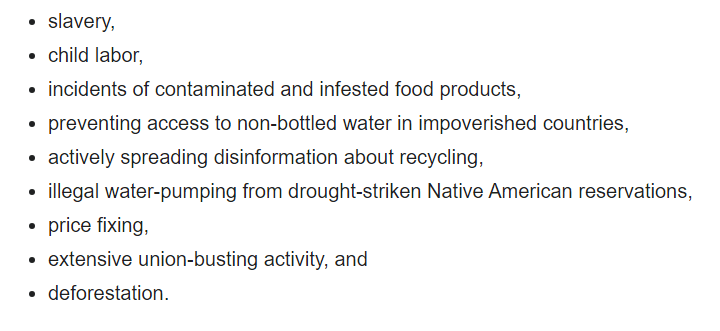
So what exactly is so bad about Nestle? It only takes a quick look at the intro on the dedicated ‘Controversies of Nestle’ Wikipedia page to get an idea:
Some of Nestle’s most infamous bad decisions revolve around baby milk formula. Primarily, the scandal in China where six babies died and 860 more were hospitalised as a result of melamine found in their formula. They also had employees dress as nurses to tell mothers that Nestle’s formula was better for their baby’s health than breast milk. This was boycotted in the seventies, but supposedly continued in developing nations decades later, on top of hospital staff bribery for patient data.
Then there’s the reports of slavery and child labour – as late as 2019, Nestle stated that they could not guarantee their chocolate products were free from child slave labour. This seems very shoulder-shruggy, considering they’re one of the world’s wealthiest companies. They can pay for anything to happen – including ensuring their suppliers aren’t exploiting children held against their will.
And none of this has even touched on their use of indigenous people’s water supplies, the plastic pollution, the deforestation…
Basically, as far as I’m concerned, totally irredeemable.
Nestle own far too many brands to list in this post. Take a look at this link to see a more in-depth list, but here are some of the big or more surprising names:
- San Pellegrino
- Starbucks at-home coffee
- Maggi
- Haagen-Dazs
- L’Oreal (over 20% share), which also includes Urban Decay, Garnier, Lancome, Maybelline and more
- Buxton water
- Various chocolate bars including Toffee Crisp, Milkybar, Kit Kat, Quality Street, and way more
- Various pet food brands including Lily’s Kitchen, Dentalife, Gourmet, Felix, and more
- Various cereal brands including Shreddies, Cheerios, Shredded Wheat, and more.
- Rowntrees sweets
Alternative recommendations: For cat wet food, many only contain the minimum requirement of meat to be able to call it meat (4% – take a look at my post about food facts to learn more). Brands like Katkin contain the highest percentages, but are pricey. Our favourite middle ground brands are HiLife and Nature’s Menu. I’d always go for supermarket own-brand cereals and sweets, as they’re often comparable quality but far cheaper and not supporting Nestle.
4. The Vegetarian Butcher
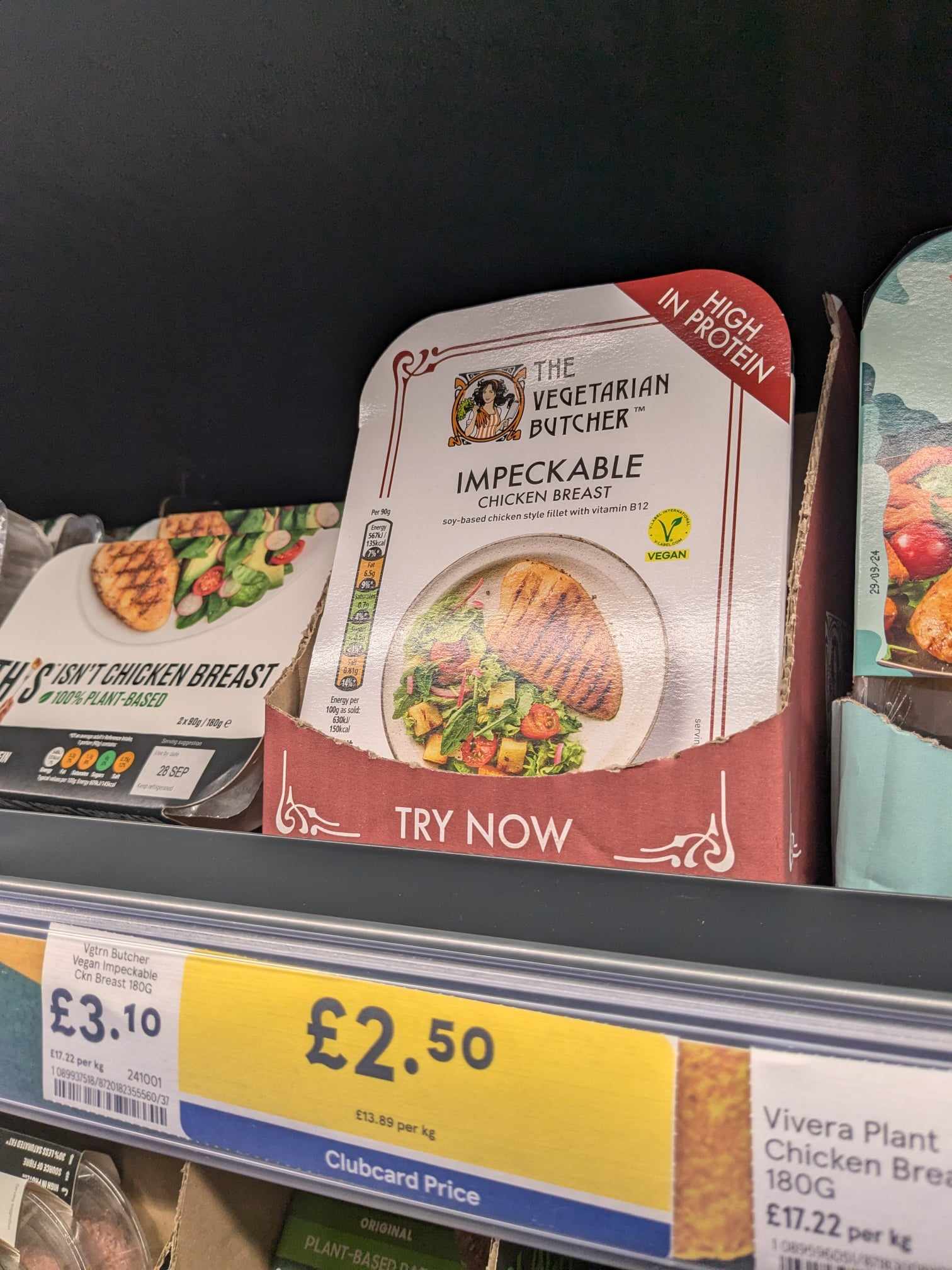
This one is owned by Unilever.
A study by Greenpeace found that despite Unilever’s pledges to reduce their plastic waste, the numbers haven’t really changed since 2017 (this is a bit of a trend, don’t you think?), averaging between 600-700,000 tonnes of plastic waste per year. Only 0.2% of its packaging is reusable, which ties in with them being the biggest corporate seller of sachets in the world.
Earlier this year, Unilever backtracked on several initiatives for improving their environmental stance, as well as worker’s rights. There have also been sexual harassment allegations in both their Kenya operations (since sold off) and the UK. There’s also reason to believe that animal testing is still a thing for this company, as even the PETA website kind of states that they’re not not doing it, with a weirdly positive spin.
All of this makes me think that The Vegetarian Butcher brand isn’t in it with the right motive. You may be veggie for a number of reasons, but if it’s for climate-consciousness, maybe this brand isn’t for you. But hey, at least vegetarian options are becoming more widespread?
Is the potential good they could do with this product outweighed by the bad stuff, though?
They own lots of consumer goods within a weird mix of areas. I mean, what on earth are these categories?!
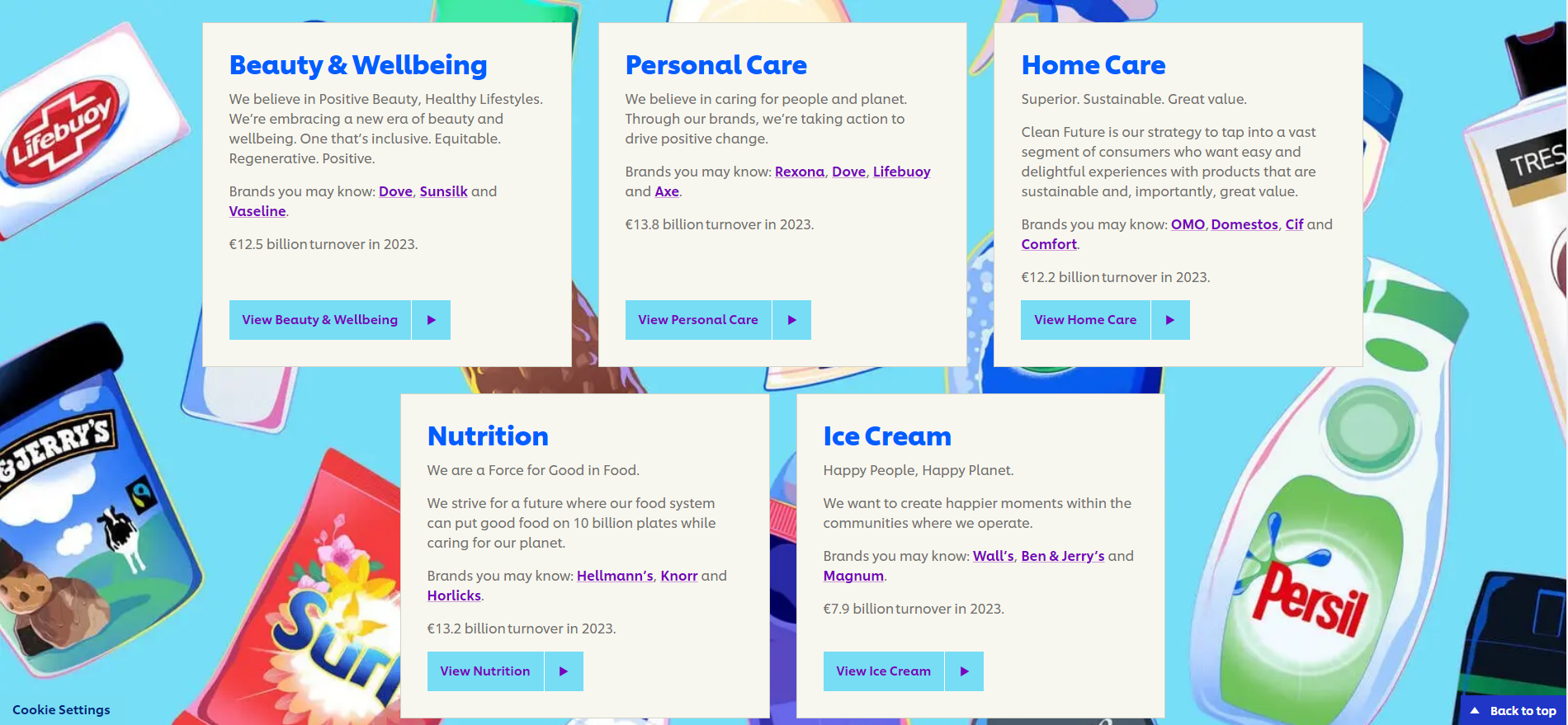
Unilever also owns:
- Graze
- Pot Noodle
- Lynx/Axe, Brut and Impulse
- Toni & Guy
- Ben & Jerry’s, Magnum, and Wall’s
- Cif and Domestos
- Bovril, Knorr, Coleman’s and Hellman’s
- Dove, Radox, Vaseline, VO5, and Tresemme
- Persil, Surf, and Comfort
- Lipton
Alternative recommendations: our favourite alternative meats come from THIS, Beyond, and Dopsu. Luckily, there are also lots of eco-friendly alternatives to health and beauty products and cleaning solutions (such as white vinegar, essential oils and water) that are just as effective.
You know when you go to a restaurant that do lots of different cuisines, and you start to be suspicious that they won’t do any of them well? Well, if you walked into a shop and saw all the brands some of these corporate giants own all together in one shop, you might think twice about shopping there too. Unless you like buying Marmite and Vaseline with your hair straighteners!
It’s important to note that the worst 100 companies are almost all oil giants. But the corporations in this article are far from faultless. Whether it’s plastic pollution, poor treatment of people, general carbon emissions, or a mix of these, they’re not things we should be funding with our hard-earned money. Where there are alternatives – be it supermarket knock-off brands or slightly more expensive independents, whatever suits your budget, there are almost always better options. Of course, certain products are hard to replace, like Coca-Cola (although I’m definitely more a Pepsi person), but now you know you can go to a different café chain to fund them less!
If you want to do more research and familiarise yourself further with some of the richest names in consumer industries, this infographic is a really good place to start.
Ultimately, it’s impossible to know where every brand comes from and how bad they are if you want to actually live your life. A shortcut is to just assume that if it’s a major corporation, its carbon impact isn’t likely to be small. Independents are generally a safer bet if you want to shop more consciously, in every sense of the word.
The idea of this post isn’t to make you paranoid about each and every thing you buy. But a little more consciousness can’t hurt! I hope this post has at least got you thinking about where your money goes. If you’re unsure, it only takes a minute to Google ‘who owns X brand’…
 Ecoetry
One thought on “4 brands you didn’t know are owned by parent companies with a history of unethical practices”