
Flying = bad. This has been drilled into us so often that we assume it’s the worst mode of transport (cruise ships are actually worse though).
Catching a plane is one of the most carbon-intensive activities we can do as a member of the public, especially when alternative transports are available. But it always comes back to time and money – sure, you can catch a train to Europe, but why pay hundreds of pounds when you can buy plane tickets for less than £20 and often get there much faster?
Holidays are a necessity, though – not just for the reset and change of routine, but also the shock of a new culture to the system. Those who are eco-conscious have to juggle that need with the guilt of two flights engulfing our entire carbon footprint for the year.
But what if we just took one?
I’m not talking about never coming back (although that’s been tempting these past few years). I’m talking about a way to cut our travel emissions by almost half. It’s easy to get into the mindset of ‘we’re going by train’ or ‘we’re flying’, but holiday trips are two-way, baby. It doesn’t have to be the same method there and back. It seems so obvious, but it took me a long time to realise. Call it hangover from growing up with package holidays.
Of course, it still needs to be affordable and make good use of your time. Depending on where you’re going though, travelling by train can actually be comparable to flying. But even if it does take longer to reach your final destination, isn’t that what holidays are all about? l e i s u r e.
So, leisurely make your way somewhere. Stop somewhere new along the way. See more sights, eat more food, spend one more night away from home.
I wanted to go to France for my thirtieth. Something about the language, architecture, and culture has always really charmed me. And if we were going to France by train, why not carry on to Italy too?
So we booked the Eurostar. Here’s how we found it.
Contents
The cost
Depending on where and when you’re going, trains are usually more expensive than planes. That’s a begrudged but accepted fact in the UK.
The Eurostar was cheaper if you went in the evenings, and on certain days of the week. When planning our trip, part of our date choice hinged on this. Weirdly, it was cheaper to go on a Saturday evening than a Sunday morning or afternoon, so we weighed up throwing all of that cost at the train, using the difference to stay in London the night before, or spending it on another night in Paris.
No brainer, really.
We also looked at the Interrail pass, which lets you on almost any train in Europe for a set amount of days, depending on the pass you purchase. However, with our route and the number of ‘travel days’ we’d planned, it worked out much cheaper to book individual train tickets than to buy an interrail pass.
This was a lot of admin, and it took us several evenings of planning to get it all figured out and lined up with the hotels, but it was totally worth it because it saved us a couple of hundred pounds.
Top tips to reduce cost
1. If you’re catching the Eurostar, hold off on buying train tickets to London until closer to the time. Ours became much cheaper, same with Manchester Airport to Nottingham.
2. Don’t just plunge for an Interrail pass. Check your route and individual train costs first. The Trainline app is a godsend for organising tickets across countries.
3. You can’t use UK railcards on EU trains, but look out for cheaper fares offered by some countries if you’re under 30 or over 60.
Say au revoir to airport stress
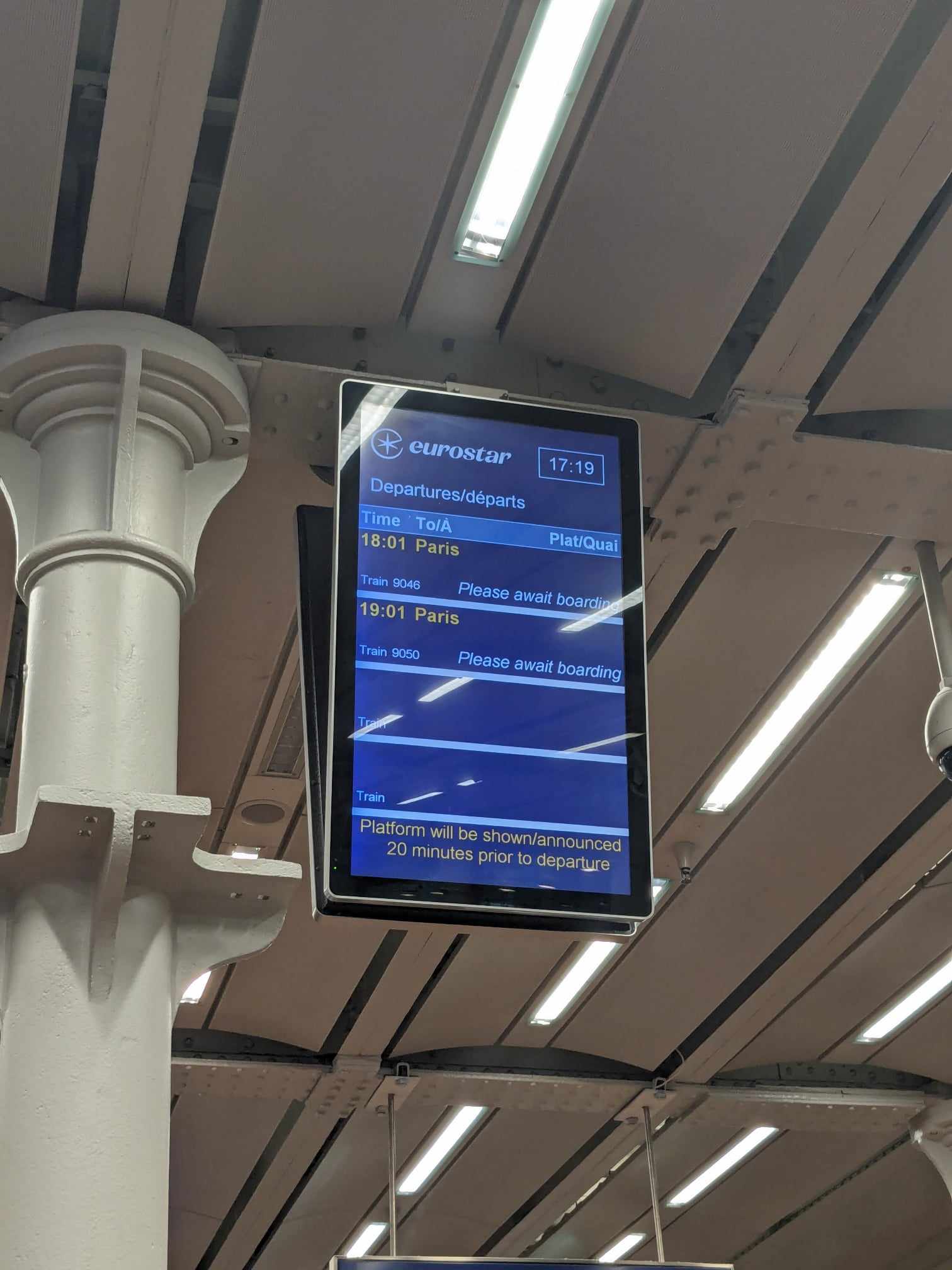
Maybe it was placebo, but catching a train felt far, far less stressful than heading to the airport. It made the start of our holiday so much more enjoyable without the anxiety of being at the airport three hours early or remembering liquid allowances or imagining our luggage sitting alone at a different airport. Instead, we mooched around King’s Cross and ate tacos in the pure, unpolluted excitement of going away.
If you’re an eternal worrier like me, it’s also nice to avoid the impending sense of doom at the thought of crashing on a deserted island with only a volleyball for company – or worse.
Trains usually have more flexibility than planes in terms of timings too, so if you miss one or it gets cancelled, there’ll likely be another later on, whereas some flights issues may completely ruin your holiday. However, not one of our trains was cancelled, and the only one of our eleven trains delayed was by less than ten minutes. The last couple of flights we’ve been on have been set back at least an hour each time.
The check-in process was ridiculously easy. Eurostar told us to get there ninety minutes before departure, but there was barely a queue for security or passport control. We were through in about ten minutes, and even had time for a hot chocolate.
Also – and this was a big pro for me – YOU CAN TAKE ANY FOOD AND DRINK ON BOARD! There are so many good grub options in and around St. Pancras, far better than an in-flight meal or overpriced airport sarnie. So we bought a load of sushi from Kineya Mugimaru (recommend) and ate it as we emerged on the other side of the Channel. A great start to the holiday.
Luggage
Of course, luggage is awkward with this type of holiday. Even if your outbound journey is by train, you still have to consider weight, size, and liquid limits if you’re flying back. However, it does mean you can comfortably take full-sized bottles of things like shampoo and sun cream, if you’re likely to get through them during your trip.
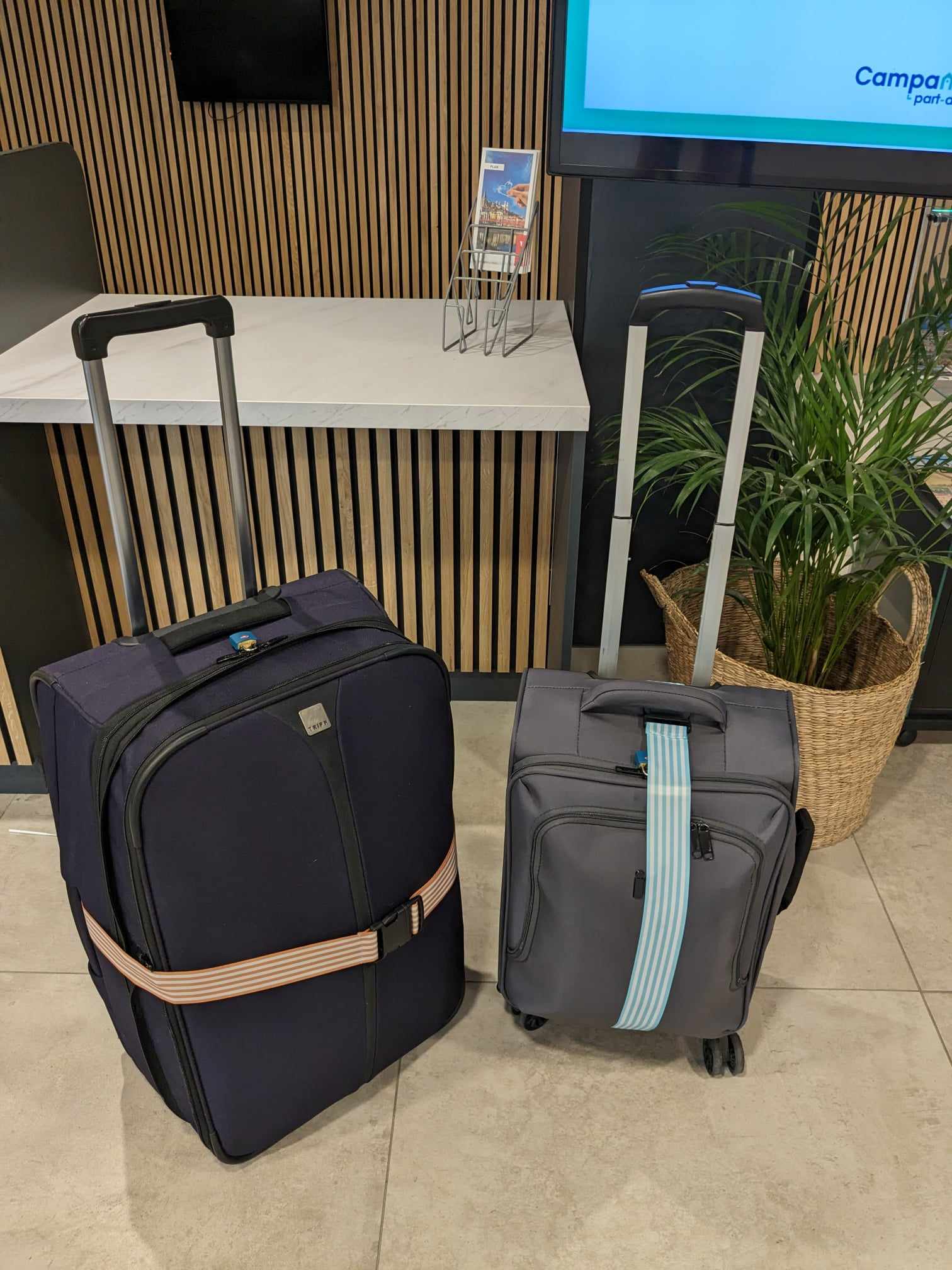
Then of course, there’s the question of lugging your stuff around between trains and destinations. Depending on how many places you’re visiting, this can be quite a burden.
For two weeks, we took two cabin-sized rucksacks, one small suitcase and one big suitcase. This was probably more than we realistically needed, but we were grateful we overpacked for all weathers, especially while snug in our raincoats during some biblical thunderstorms in Florence.
Make sure to triple check baggage allowances with each of your train providers before you go, as we had to buy extra luggage for one of our train journeys, as well as for the flight back. Most were very reasonable with their allowances though.
I’d also recommend budgeting in a bit of additional spend for bag dropoff points. We used Bounce, which varied in price depending on where you were and how long you were leaving your bags, but this really helped make the most of our days when we got early trains to new places. We used the hotel dropoffs, so it felt pretty secure and usually cost around 5-7 euros per bag per day. There was also one called ‘Nannybag’, which gave me great mental images.
On the trains
My God, the views
Don’t get me wrong, I love staring out of a plane window. Flights give me neck ache from being glued to that little rectangle. The clouds and the little strings of lights are magical, and it’s something I feel extremely privileged to have witnessed in my lifetime.
But.
The views from the ground are something else. And although we can profess to having been ‘through’ a place on a plane, it’s so much more profound actually seeing it. Being present in those places. Seeing how another culture operates. Being there.
My advice is to plan your holiday itineraries before you go and not to save this research for the trains, because you won’t have time.
You’ll likely be travelling through French and Italian countryside, and maybe coastal towns. They are god. damn. beautiful. But this was actually really annoying because I like to read and write when I’m travelling, and I couldn’t do that because the window insisted on hogging all of my attention.
The travel time is obviously greater than if you flew, but it honestly, ironically, flies by. And we did so much in each city we visited that our train journeys became little periods of rest.
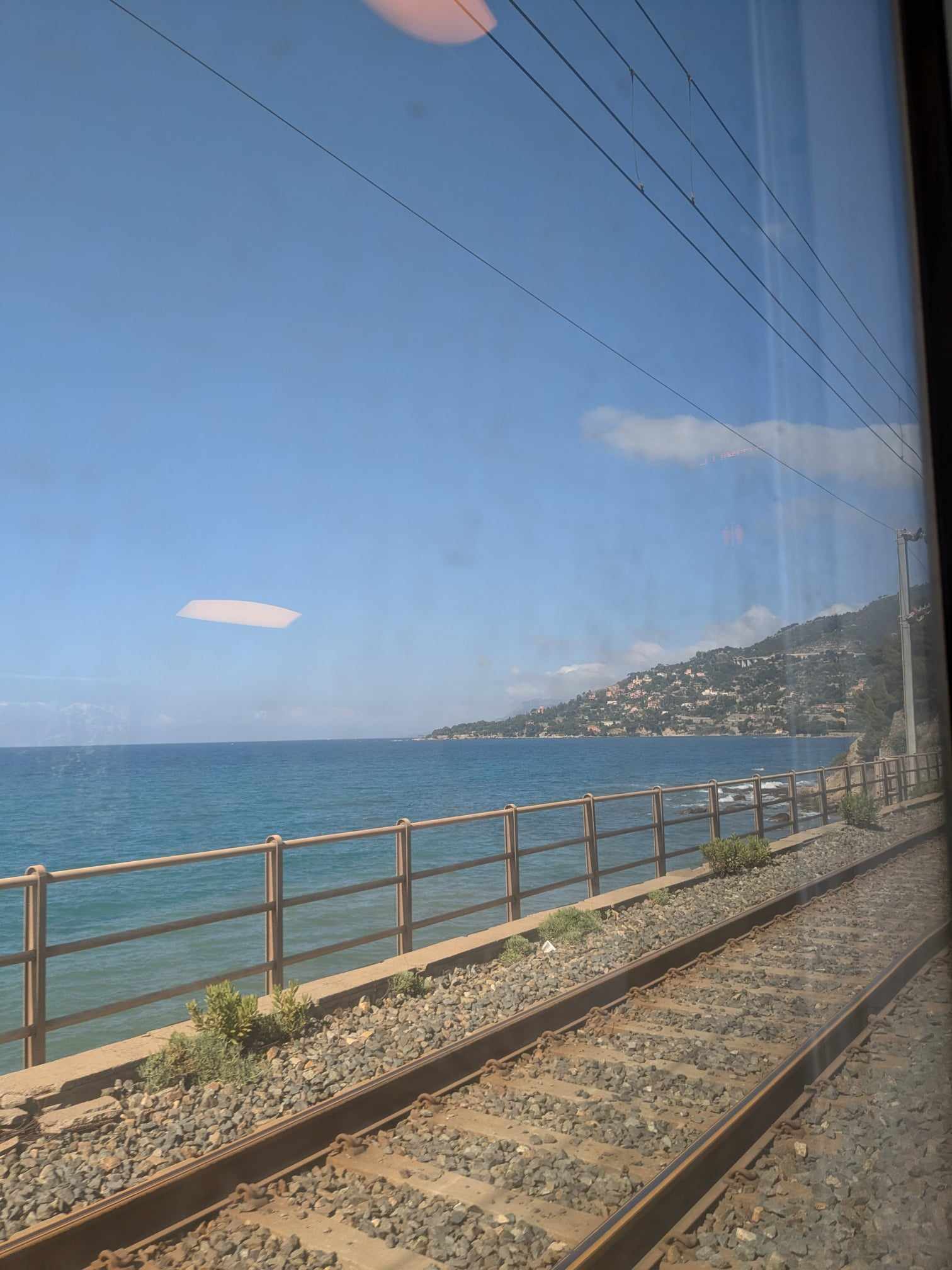
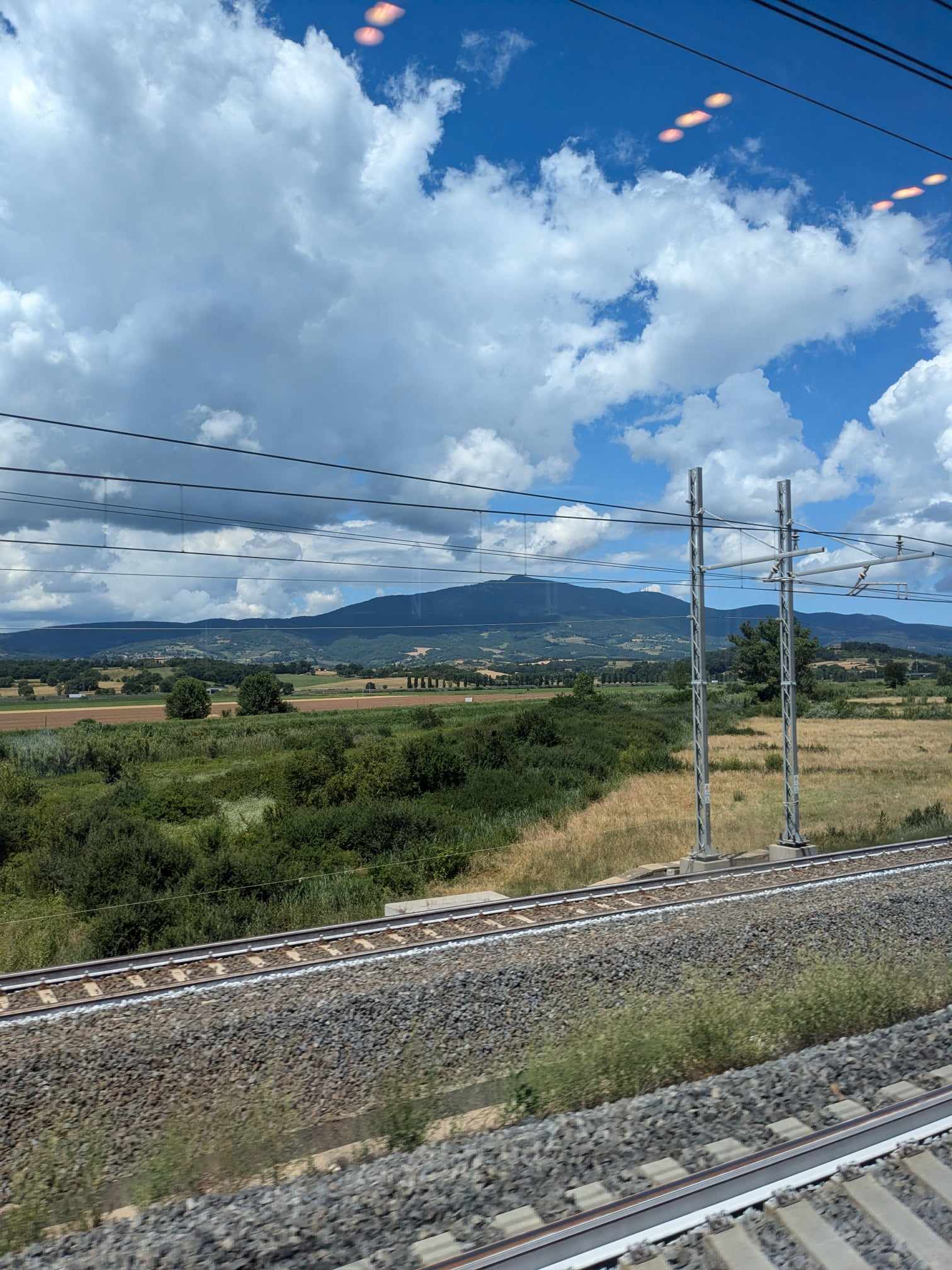

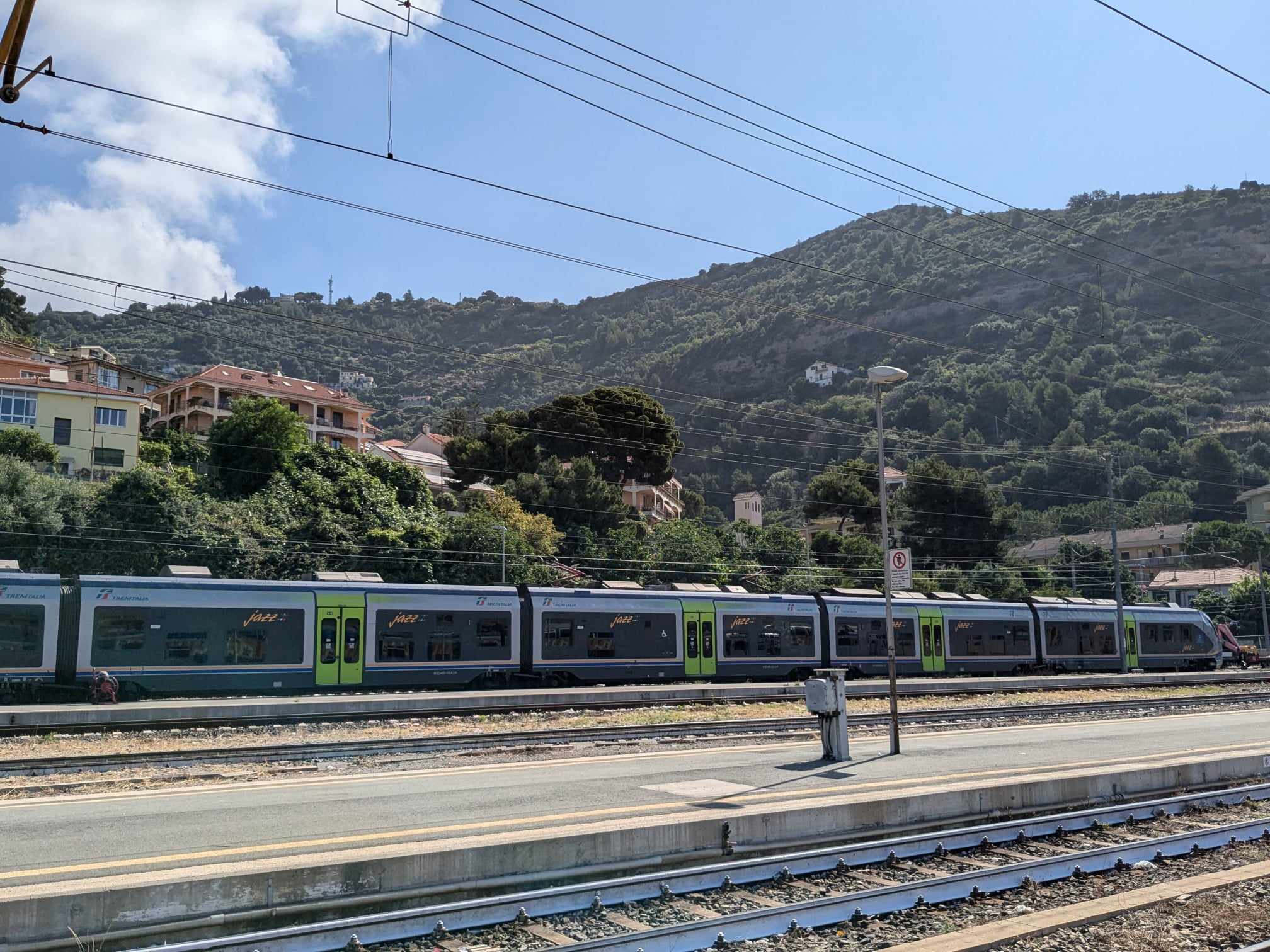
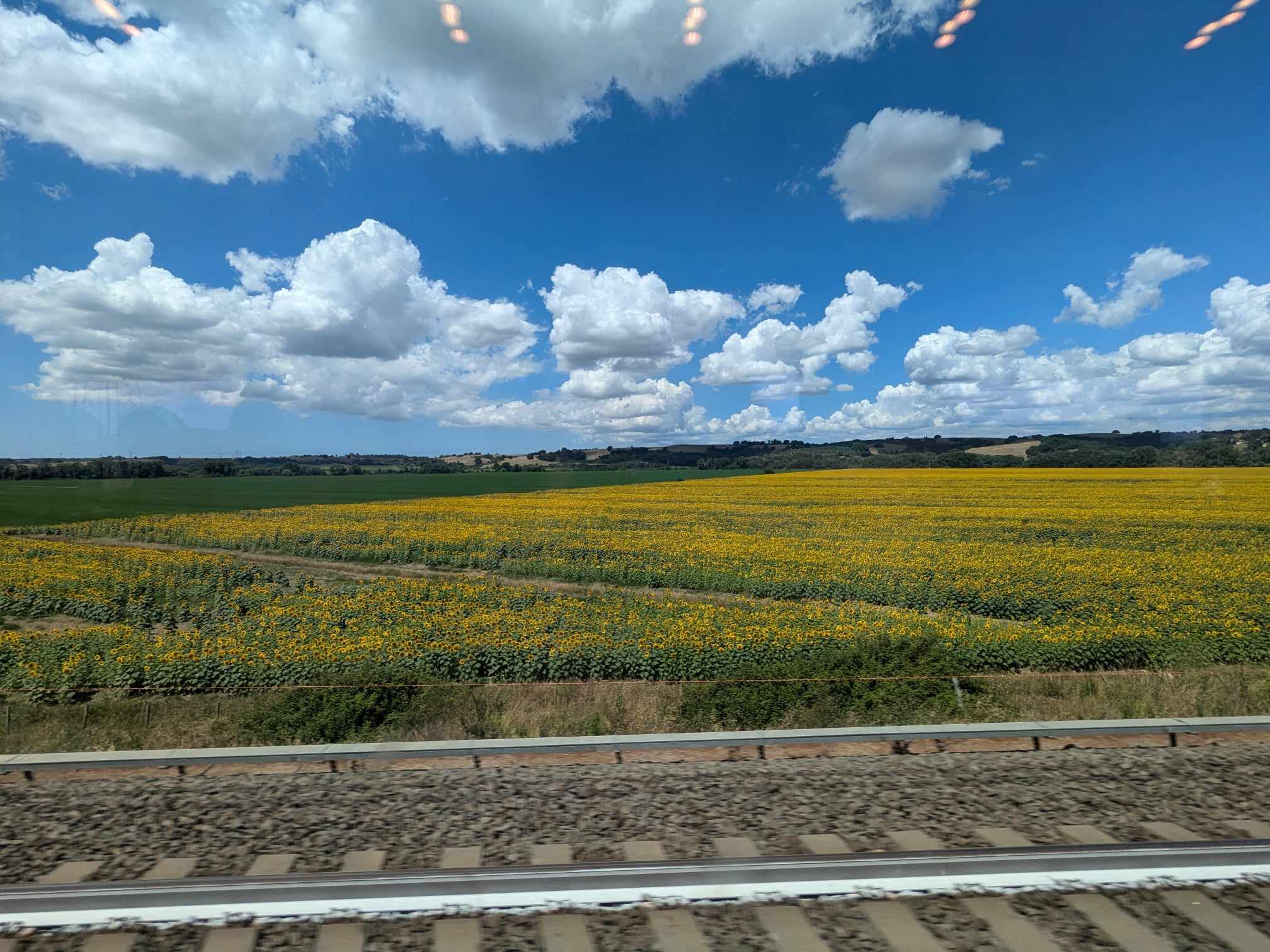
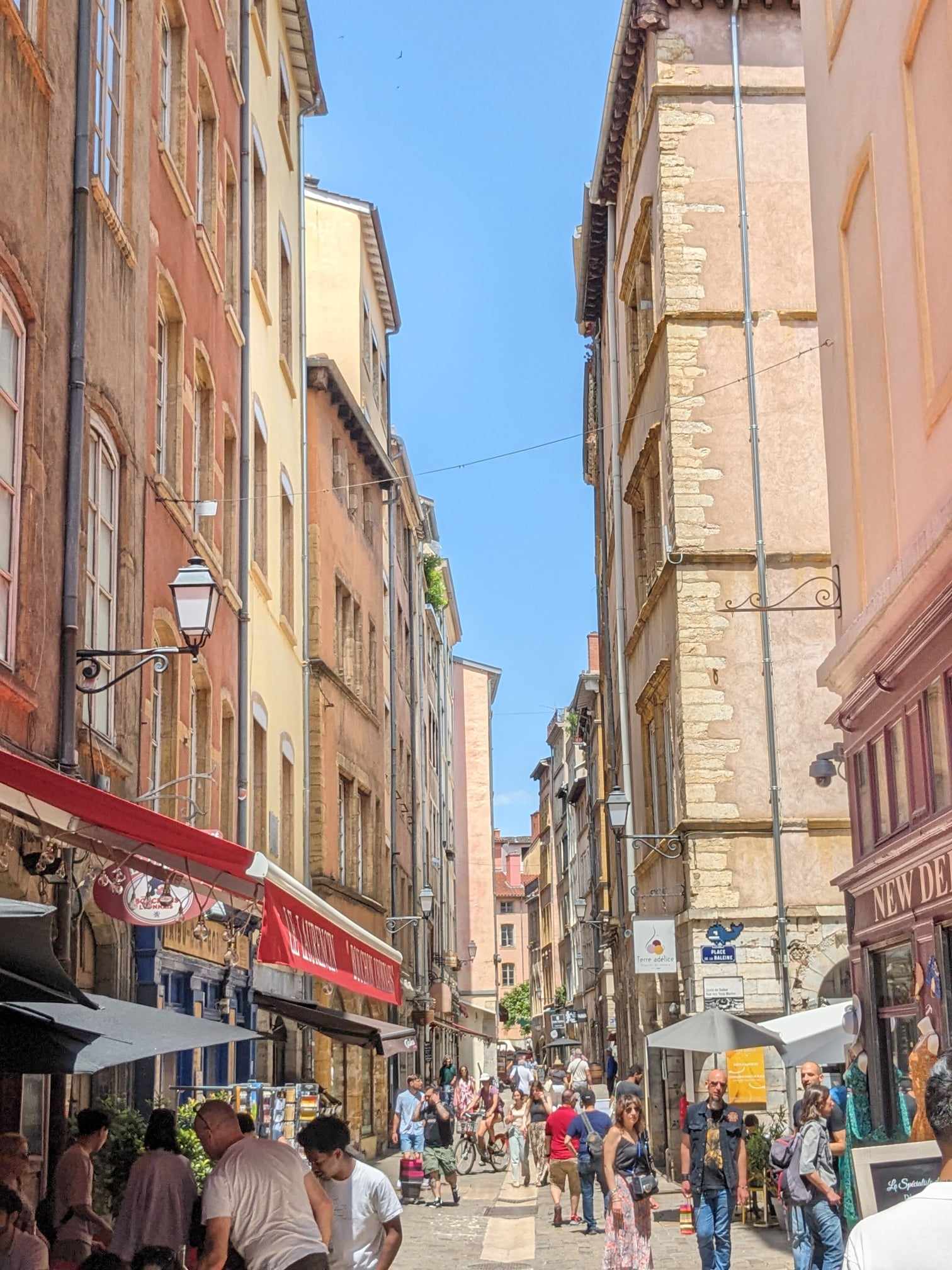
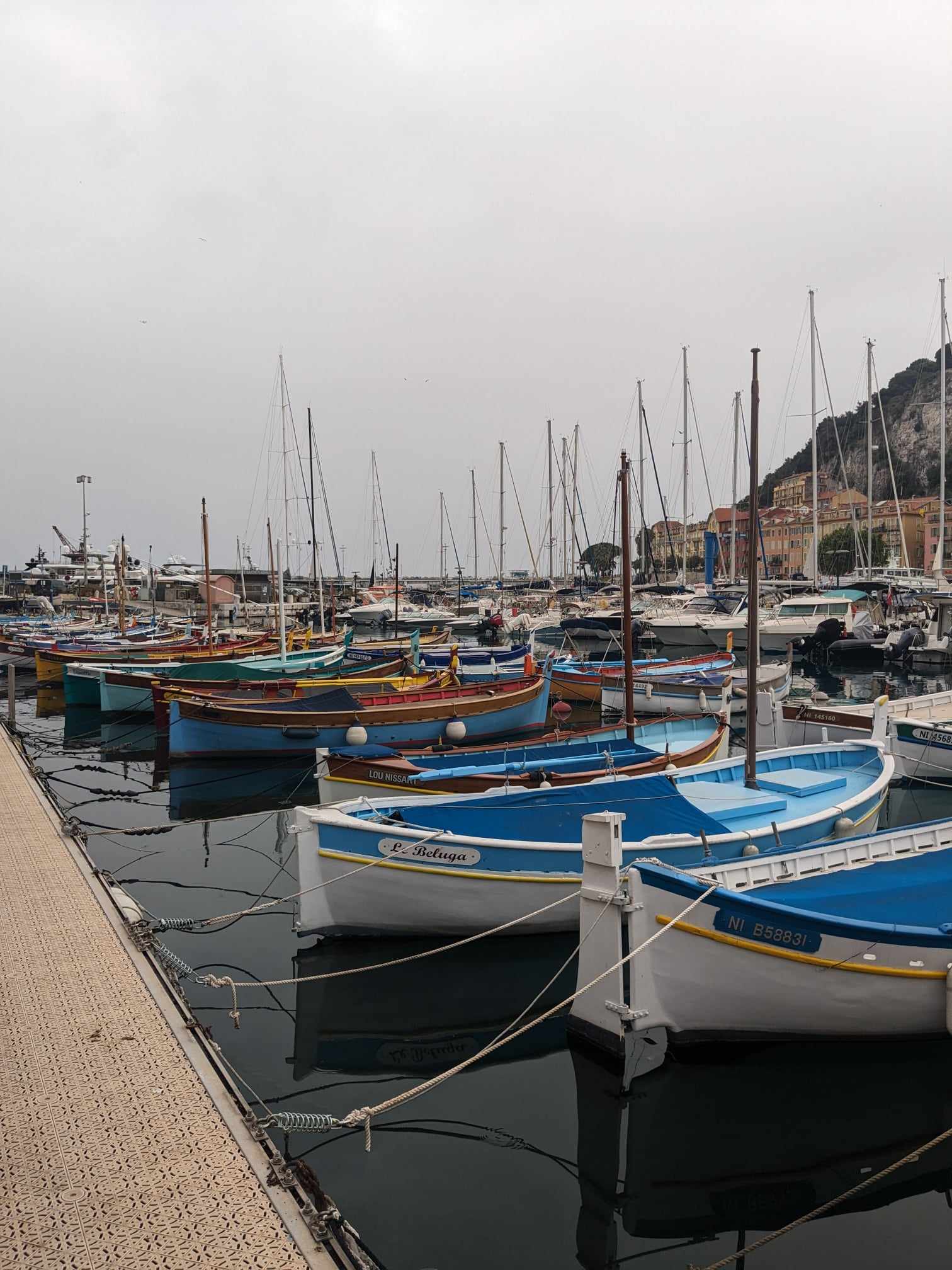
I did find it weird though just casually crossing country borders. We’re so used to being passport checked when flying, but if you’re travelling in the Schengen area, you can just skip merrily into another country hassle-free. When we came out of the Eurostar tunnel (which just felt like a normal train tunnel) we were suddenly in France. At some point after we left Nice, the station signs became Italian. There was no marker or fanfare, no police checking our papers. If not for the change in language, we may not have known we’d entered a new country.
We only had two changeovers for our entire trip, and the one in Aix-en-Provence was like nothing I’ve ever experienced. The station itself was like a modern East Midlands Parkway, but instead of power station views we were met with deep green trees in every direction, and the air in our lungs felt so clean. The moment we stepped off the train we were hit with the overwhelming scents of fresh pine and lavender. If only the French were good at making perfume…
The trains
I actually like spending time on trains. It’s time to pause, drop all responsibility, catch up on your book or just think and listen to music. We get so little time for this in the day-to-day, so it’s almost a treat to just be stuck moving from A to B. So I was excited for the eleven trains we had planned.
I was also rearing for my first time on a high-speed train. The Eurostar set a high bar. I honestly think everyone in the UK should take a European train at least once in their lives to realise just how rubbish our networks are.
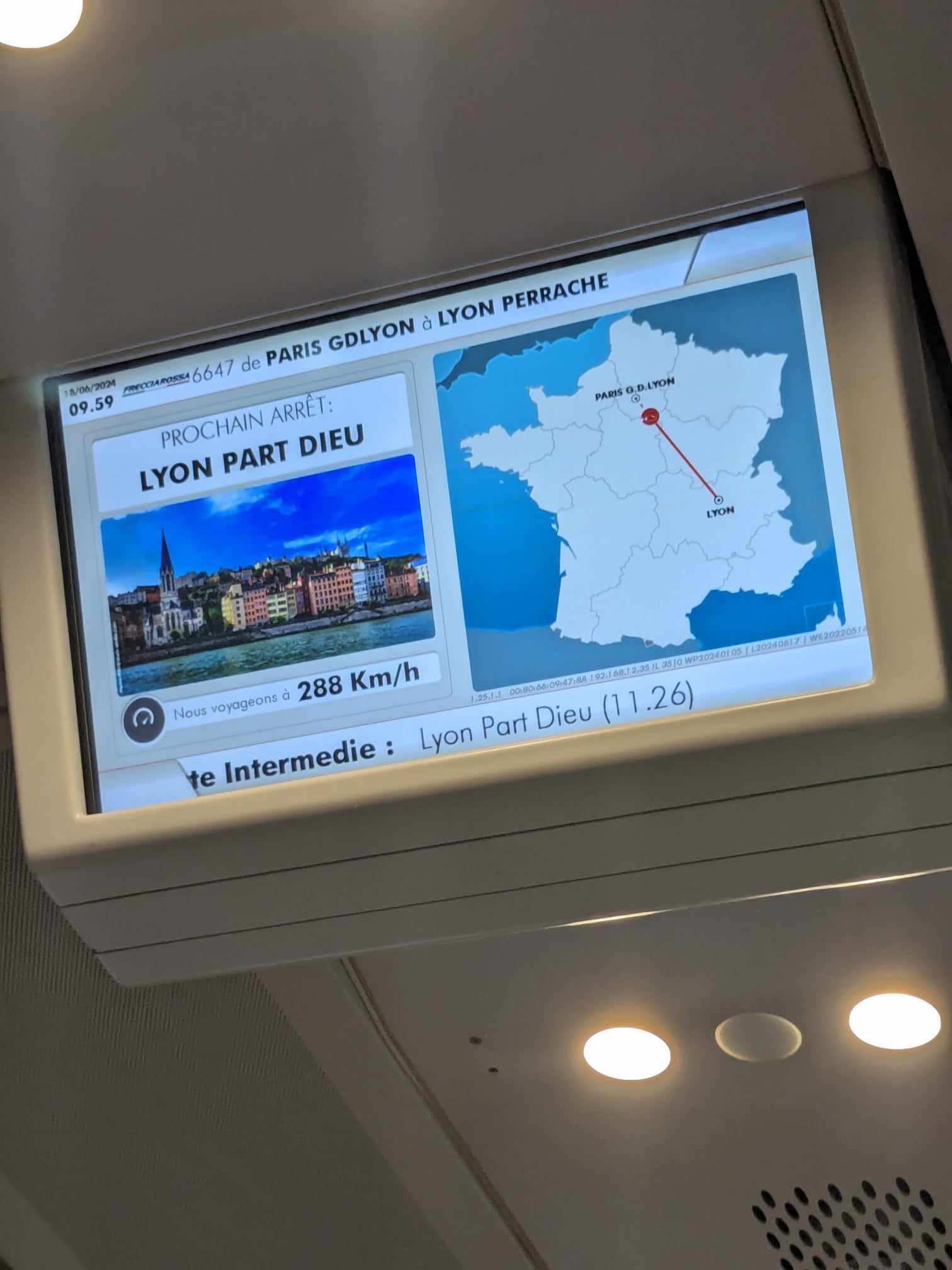
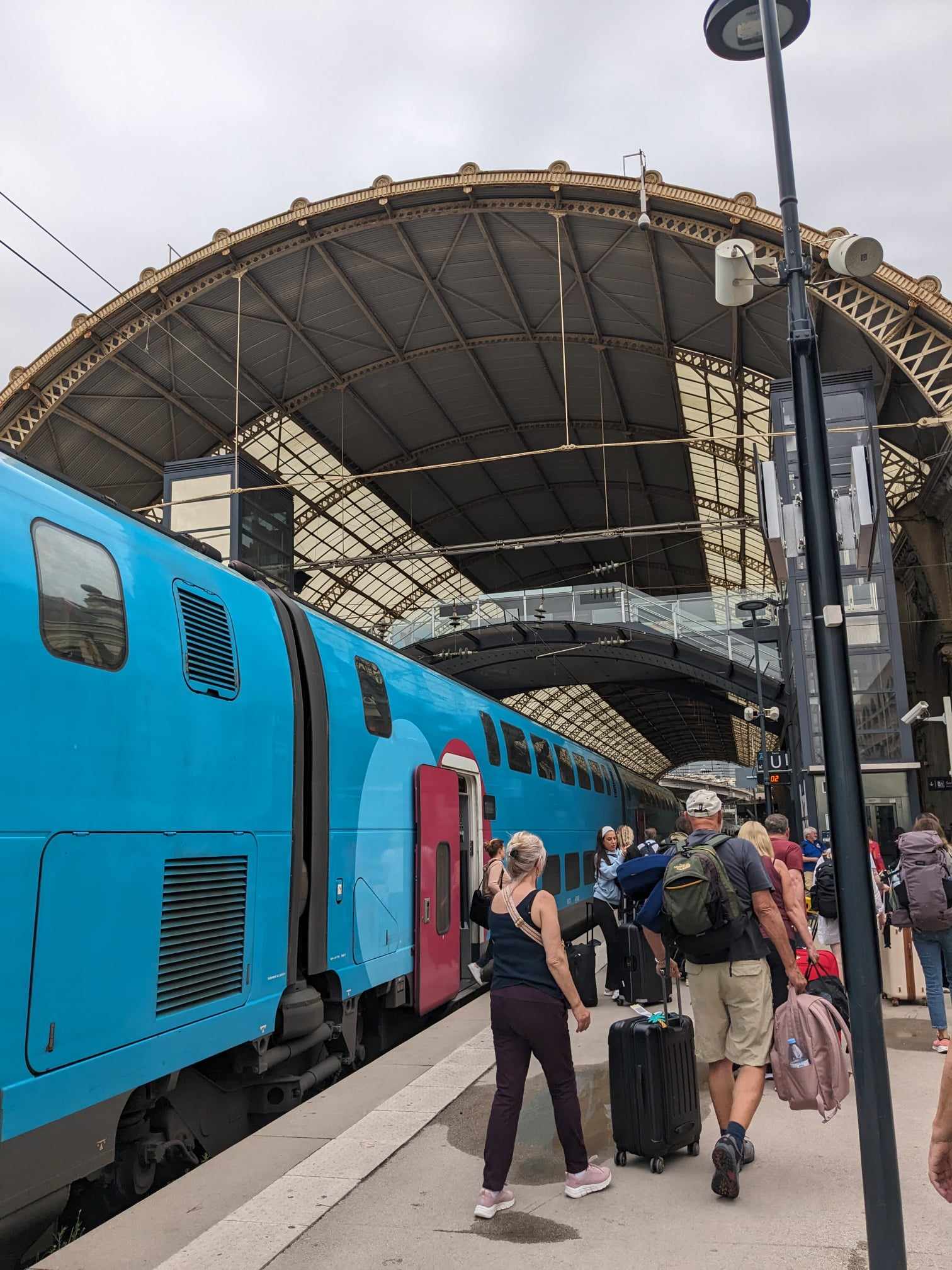
Of course, they’re quick. All our journeys were around two hours but covered far greater distances than trains back home. Better yet, they all had comfy seats, good air con, loads of leg room, and huge overhead racks that could fit our biggest suitcase. Some even had personal bins at the tables and those little screens you get on planes to show where you are in your journey. There were double decker trains too! Mind blowing. And much comfier than an economy flight.

Carbon comparison
Train emissions vary based on a few factors, including fuel types, how fast they run, and how often they stop. Many UK trains still rely on diesel, which isn’t great for the environment, but is still far less bad than plane emissions. However, Europe’s high-speed trains are so efficient they practically counted for zero for a lot of our journeys.
Using the journey from Paris to Lyon (466km), the EcoTree train emissions calculator estimates that high-speed electric trains (1kg carbon) cause approximately one-third of the emissions of a long-distance electric train (3kg), and only 8% of a medium distance part-diesel train (12kg). For comparison, every one-way flight I looked at was at least 100kg, so even the worst trains are dramatically better than flights. Our two trains from Nottingham to Paris totalled approximately 6kg, whereas a flight from Manchester to Paris rocked in at 199kg – a reduction of about 97%.
Below are the carbon emissions of our journeys, as well as the emissions of others ways we could have travelled.
Data disclaimer: flights out vary between Manchester and London Stansted to find better deals and direct flights. Prices vary depending on dates and times chosen, and were correct as of July 2024. Data gathered using EcoTree’s train journey calculator and MyClimate’s flight calculator alongside flights found on SkyScanner (6 July 2024).
If we’d flown for six separate city breaks
- Manchester – Charles de Gaulle Paris: 398kg
- Manchester – Lyon St Exupery: 535kg
- Manchester – Nice: 629kg
- Manchester – Genoa: 628kg
- London Stansted – Florence: 606kg
- Manchester – Rome Ciampino: 736kg
Total: 3,557kg
If we’d flown between each city we visited
- Manchester – Charles de Gaulle Paris: 199kg
- CDG Paris – Lyon St Exupery: 170kg
- Lyon – Nice: 149kg
- Nice – Genoa Cristoforo Colombo: 127kg (if direct flight even available)
- Genoa – Florence Peretola: 135kg (if direct flight even available)
- Florence – Rome: 143kg
- Rome Ciampino – Manchester: 368kg
Total: 1,291kg
Our actual trip – trains between each city and one flight
- Nottingham – St Pancras: 5kg (part-diesel)
- St Pancras – Gare Du Nord: 1kg (high-speed)
- Gare de Lyon – Lyon Part Dieu: 1kg (high speed)
- Lyon Part Dieu – Aix-en-Provence: 1kg (high-speed)
- Aix-en-Provence – Nice Ville: 0kg (high-speed)
- Nice Ville – Ventimiglia: 0kg (local train?)
- Ventimiglia – Genoa: 4kg (part-diesel?)
- Genoa – Firenze Campa di Marte: 0kg (high-speed)
- Firenze Santa Maria Novella – Roma Termini: 1kg (high-speed)
- Rome Ciampino – Manchester Airport: 368kg (flight)
- Manchester Airport – Nottingham: 4kg (part-diesel)
Total: 385kg, of which only 17kg were the trains.
Possible journey comparisons
| Six city breaks by plane | All trains | Flights between locations | All trains with return flight | Bookend flights, trains between locations | Two week holiday in end location | |
| Carbon cost | 3,557kg | 26kg | 1,291kg | 385kg | 583kg | 744kg |
| Travel time (not incl. airport time) | 44 hours 20 | 35 hours 40 | 13 hours 30 | 22 hours 40 | 22 hours 30 | 10 hours 20 |
| Travel cost (incl. luggage and seat costs: £32) | £1168pp | £458pp | £856pp | £315pp | £298pp | £167pp |
Some interesting facts from the above table:
- We visited six different cities in two countries for 48% less carbon than if we’d flown to Rome and back for the full fortnight.
- Swapping out our Eurostar trip for a flight to Paris would have added almost 200kg (+34%) of carbon to our travel emissions, but saved us only ten minutes and cost less than £20 more
- It generally costs more to travel by train, but less to do six city breaks in one trip than to do them individually.
- The amount of time it took us to travel to Rome via multiple cities was double a direct flight there and back, but half what it would have taken doing individual city breaks. Doing the entire trip by train would also still be more time-efficient than flying.
Get choo-chooing!
You can get to most places in Europe by train, and the option of flying back is a safety net for exploring somewhere lesser known and less touristy.
Eurostar alone can get you to France, Belgium, the Netherlands, and Germany, but you can of course carry on to other countries. Pick an end point with an easy-to-reach airport for the final part of your trip, and work backwards from there.
There were honestly so many highlights to this trip, and many of them were due to the ease of travel.
Main pros of travelling to Europe by train
- No stress around getting to the airport early
- No 100ml liquid restrictions
- Can take any food and drink on board
- Reduced fear of death by plane crash!
- Cancellations and delays are less catastrophic
- Get to experience stunning scenery
- Potential to visit more places as you go
- Far lower emissions
- Comfier than budget airlines.
So, after all that, would I do it again? Definitely. We loved every second. Although I’d probably do fewer places in the same amount of time because throughout we were exhausted. I wouldn’t change that trip for the world, but on our next one, we’re having more beach days.




 Ecoetry
One thought on “How to halve the carbon impact of European holidays”