
Ah, food. The waypoint of the day – each chunk of time broken up by thoughts of the next delicious meal. Food is more than survival in the 21st century – it’s a hobby. A way of life.
But how much do we really know about what we’re eating?
Sure, there are food standards and regulations to ensure what we put in our trollies is what we think it is. But I doubt very many of us have the time to stop and read every label on every product in our weekly shop, nor to learn about the minimum requirements and potential loopholes of government legislation.
Certain products have their own rules (compositional standards), where there’s a minimum amount of the ingredient legally required for it to be called what the manufacturers claim it to be. And this is where some of the sneakiness comes in.
The government website explains that these standards are created for items that ‘are at risk of being substituted for lower quality alternatives’. This includes items such as:
- meat and fish products
- bread and flour
- sugars and preserves
- chocolate and soluble coffee
- water
- milk products, including infant formula
- fruit juice
Things you may not have even questioned before. I’ll start with the one that shocked me the most…
1. Honey is just sugar (do-do do do do do)

That’s right, sweetie – that syrupy nectar we all crave on our toast is more often than not just that – syrup. If your honey says ‘a blend of EU and non-EU honeys’, that’s a big ol’ loophole for checks on quality. You’ll be surprised just how many popular brands are stated as blends.
Basically, we all love honey, and there isn’t enough to supply that demand. With bee populations declining, Europe had to look to China, but even with their bees we can’t produce enough. So to make up the numbers, shortcuts are taken, and often syrups are added to bulk out the product.
As we can’t tell exactly where these products have come from based on the informative, ‘EU and non-EU’, there’s no real way of knowing what the honey in our cupboards is made up of.
You can see it from the contradictions in the wording on the bottle to the right – Not far below the the claim of “100% pure and natural” is the acknowledgment that it’s a “blend” of different honeys. There’s minimal requirement to state the countries of origin of these products, so we can’t possibly know whether our honey is more syrup than anything else.
If you want real honey, look to the top shelf where they have the jars security tagged like alcohol or condoms. Otherwise, you can try and find a local beekeeper, or save your honey purchases for when you’re abroad somewhere rural.
2. Your fruit and veg might be coated in plastic
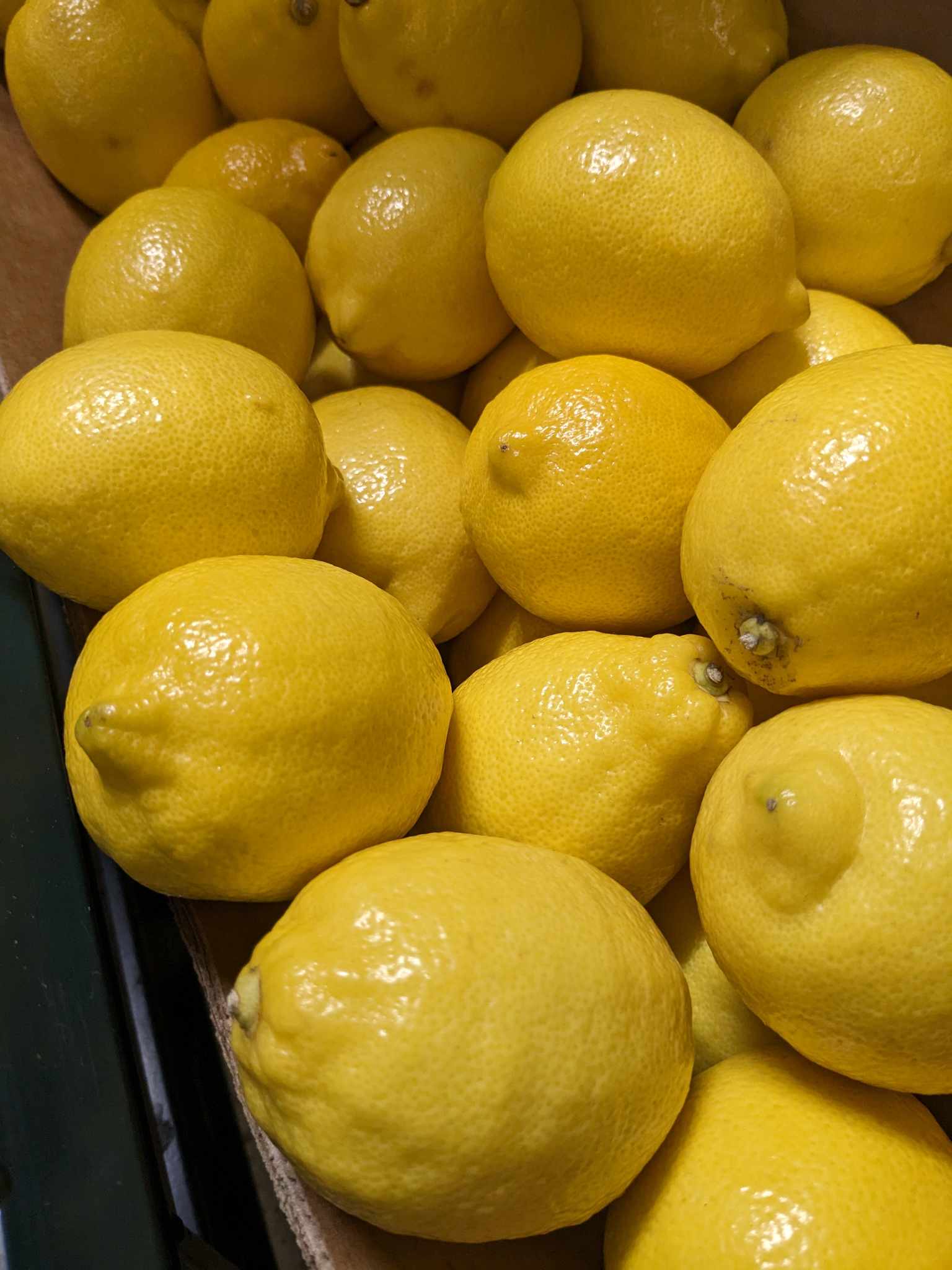
Surely there’s nothing wrong with reliable, healthy fruit and veg?!
Well, I’m sure we’ve all heard of waxed and unwaxed lemons, but until I researched for this post, I’d just assumed some lemons were born waxier than others.
Although some fruit and veg have natural wax to retain water and avoid rot, these often dissolve when farmers wash off dirt and pesticides in processing. So a new coat is added. Produce is sprayed with a cocktail of wax, fungicide, and emulsifying chemicals, which both makes the food last longer and look more appealingly shiny in the supermarket strobe lights.
Common ingredients in this coating include carnauba palm wax (not the same tree as palm oil), beeswax, and shellac, as well as ‘some petroleum-based waxes’ like paraffin and polyethylene.
This is the difference between that lovely, shiny red apple and the duller, multicoloured ones. And it’s not just the healthy stuff – these waxes are also present in some sweets, like chewing gum and jelly beans.
Scientists state that these waxes are safe to eat, as they are indigestible and should pass through our systems – but that hardly sounds pleasant. For the record, here are some other uses for these waxes:
- Carnauba: shoe polish, furniture polish, car wax, surfboard wax, cosmetics.
- Shellac: (the “resin from the secretions of the female lac insect” and probably not suitable for vegans) nail varnish, wood finish, surface sealant, hard-drying adhesive for tubular tyres.
- Beeswax: furniture polish, rust prevention, envelope sealant, those little wraps for your sandwiches.
- Paraffin: candles (that emit carcinogens when burned), cosmetics, crayons, Vaseline.
- Polyethylene: this is basically just plastic, so bottles, bags, wire insulation, food packaging, etc.
What’s not talked about, though, is the environmental impact. Does the cost of manufacturing and applying wax outweigh spoilage? What about the ingredients used to create them? Are they harvested sustainably and in fair working conditions?
I’m pretty sure I’ve never seen the ingredients list of a wax on fruit and veg, so we can’t always know what we’re ingesting. Either way, I’m going to start grabbing the matte-looking produce from now on!
3. Pet food is like a late night mystery meat kebab
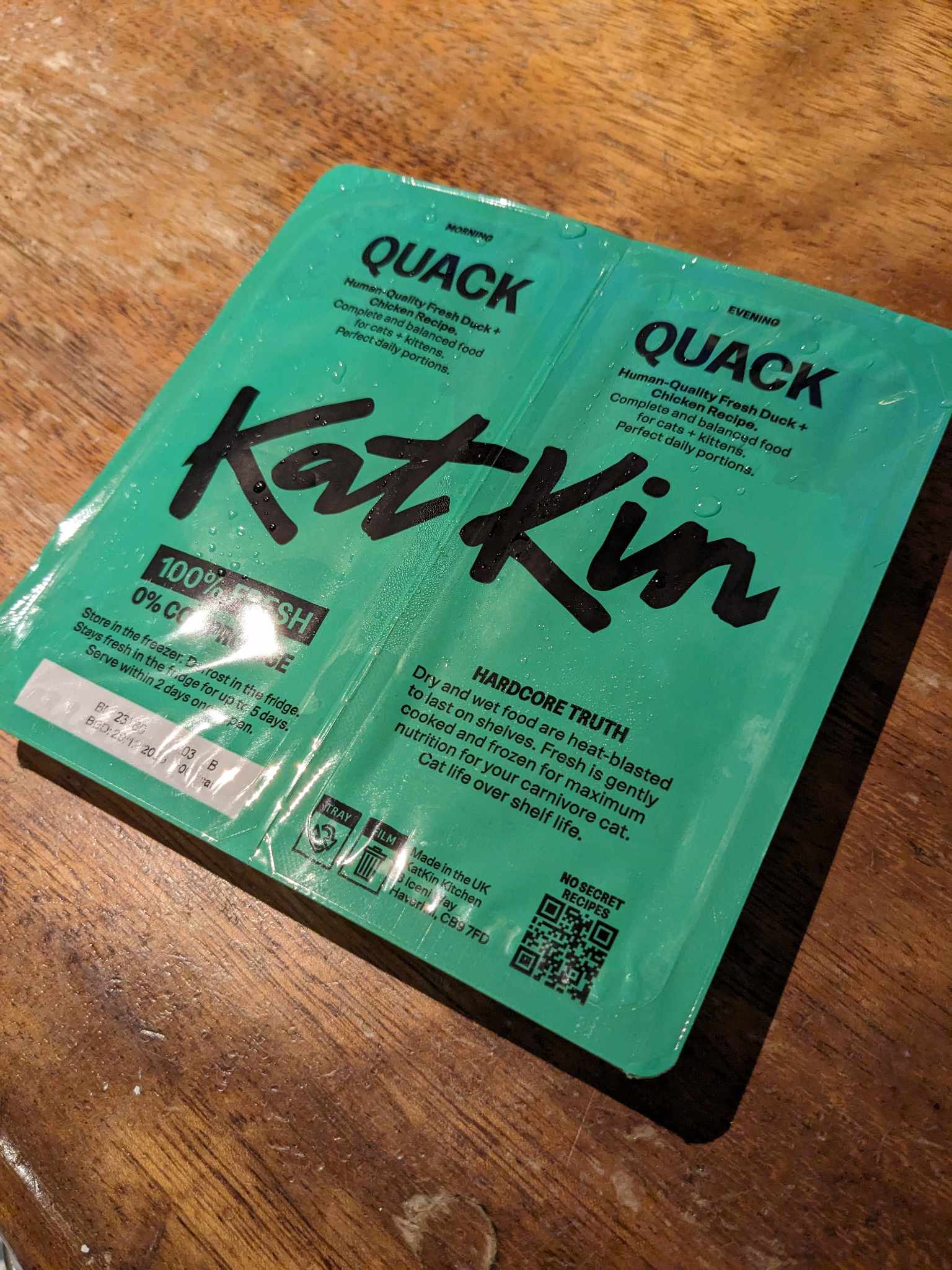
So, technically still food, and it’s so high up in this blog because it’s one of the more shocking (to me at least). Sure, animals have less fuss when it comes to eating any and all the bits of their prey, but pet food only needs to legally contain 4% of the meat it claims to have in it. And the vast, vast majority of brands stick to that minimum.
So what makes up the rest of that appetising chicken in jelly pouch? The rest are often bulking agents like grains that your pet can’t properly digest and additives so that your pet not only gets fed items not particularly nutritious, they also get addicted to eating it.
Yep – they’re eating McDonalds every day. And we all know how that went on Man vs Food. That’s why the true premium brands will boast shinier coats, better breath, and less smelly poos – cats on cheaper brands have the equivalent of greasy acne and McBowel problems that clear up with a better diet.
Shoutout to the Bella & Duke cold callers that collared me in my PJs just as my cat yelled for breakfast for bringing my attention to this one. Their food is very expensive though, especially if you’ve previously been buying bog-standard pet food.
They also told me that pet food companies are usually sneaky about their true meat content. If you look for the ingredients (clearly visible on the back of human food) you’ll have to look at the bottom of the pack. Almost like they’re hiding it. Guaranteed, if you find the ingredients on the bottom, you’ll find that telling 4% figure. Be on the lookout for the even sneakier ingredients that say things like, ‘chicken 14% of which chicken 4%’.
This isn’t just supermarket brands, or Felix and Whiskas (why would we expect less from their parent companies, Nestle and Mars?). This extends to Purina (also Nestle), Iams (also Mars), and other brands considered premium. In fact, when our cat was throwing up more than normal, our vet’s first reaction was ‘what brand is his food?’
Although the best possible options like KatKin are costly, there’s some middle ground alternatives for cat food that we’ve found, including Hi Life and Nood, which aren’t perfect but they are better. If you have a dog, I’m sure you could do what we did and stand around in the pet food aisle for ten minutes looking at the bottom of every box until you find one!
4. Meat products are more like pet food

On a similar topic – meat content. I’m sure we’re all aware of how low the meat content is in the average sausage (especially if you watched series 15 of Taskmaster), but it gets worse.
The minimum legal requirement of pork content for sausages is 42%, but sausage rolls only need 6%. When you consider that the pastry takes up a good portion of this percentage, this makes a bit more sense. However, we went and looked at several sausage rolls across several supermarkets, and Waitrose came out on top with 40% in their fancy range, and even 36% in their ‘essentials’.
In contrast, Eastman’s brand sausage rolls contain only 16%… oh, and palm oil.
Meat pies only need 12.5% minimum of meat. Mad, innit? Here are the other legal requirements for meat products if you’re interested in learning more.
The other thing about meat is water content. It has to be declared on the label if meat has been pumped full of water – but not if it’s less than 5%. So why on earth wouldn’t meat farmers bulk out their produce to a point of 4%, or even 4.99%? So you can potentially knock a bit more off your sausage roll’s meat rate.
In short, what you’re buying as meat might just be a big old bag of watery bulking agents with a hint of pig. Bon appetit!
5. Endorsements can’t be trusted
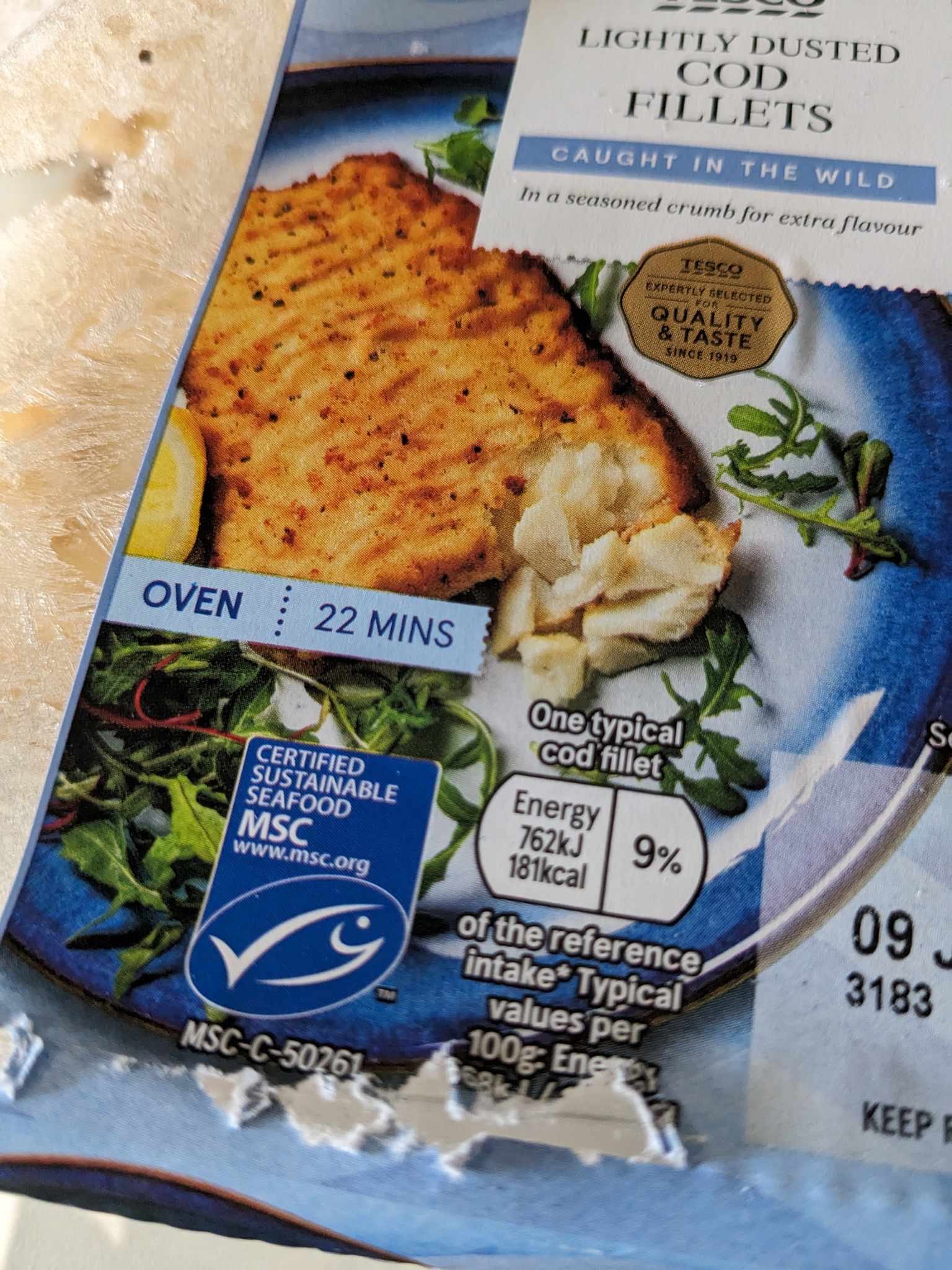
If you’ve seen the documentary Seaspiracy, you’ll know about this already, but trading standard labels on particular products don’t always hold the standards they supposedly strive for.
It makes sense when you think about it – how could the Marine Stewardship Council (MSC) possibly be able to say that a product has been caught sustainably without having a worker present on every fishing ship?
The documentary makes a point of highlighting just how easy it is for companies to be branded as ‘MSC-approved’, as well as the lack of accountability for fisheries with high levels of ‘bycatch’ – other sea-dwelling species that are harmed when caught in the nets during fishing hauls, such as dolphins and whales.
When you think about it, any organisation that is essentially ‘pay to display’ shows a conflict of interest. Can we really trust these labels?
That’s not to say that they’re not going to be more sustainable than some of the products uncertified by the MSC. But it’s something to consider if these accreditations play into your choice of product. You can never be 100% sure just because of a blue tick that it’s truly sustainable.
Another organisation to look out for is the RSPO – the Round table for Sustainable Palm Oil. In a similar way to the honey point, this ensures the use of sustainable palm oil, but now companies can get away with saying a blend of MB. One such product is the chocolate brand Monty Bojangles (which we were highly disappointed to discover).
6. Locally sourced doesn’t equal sustainable
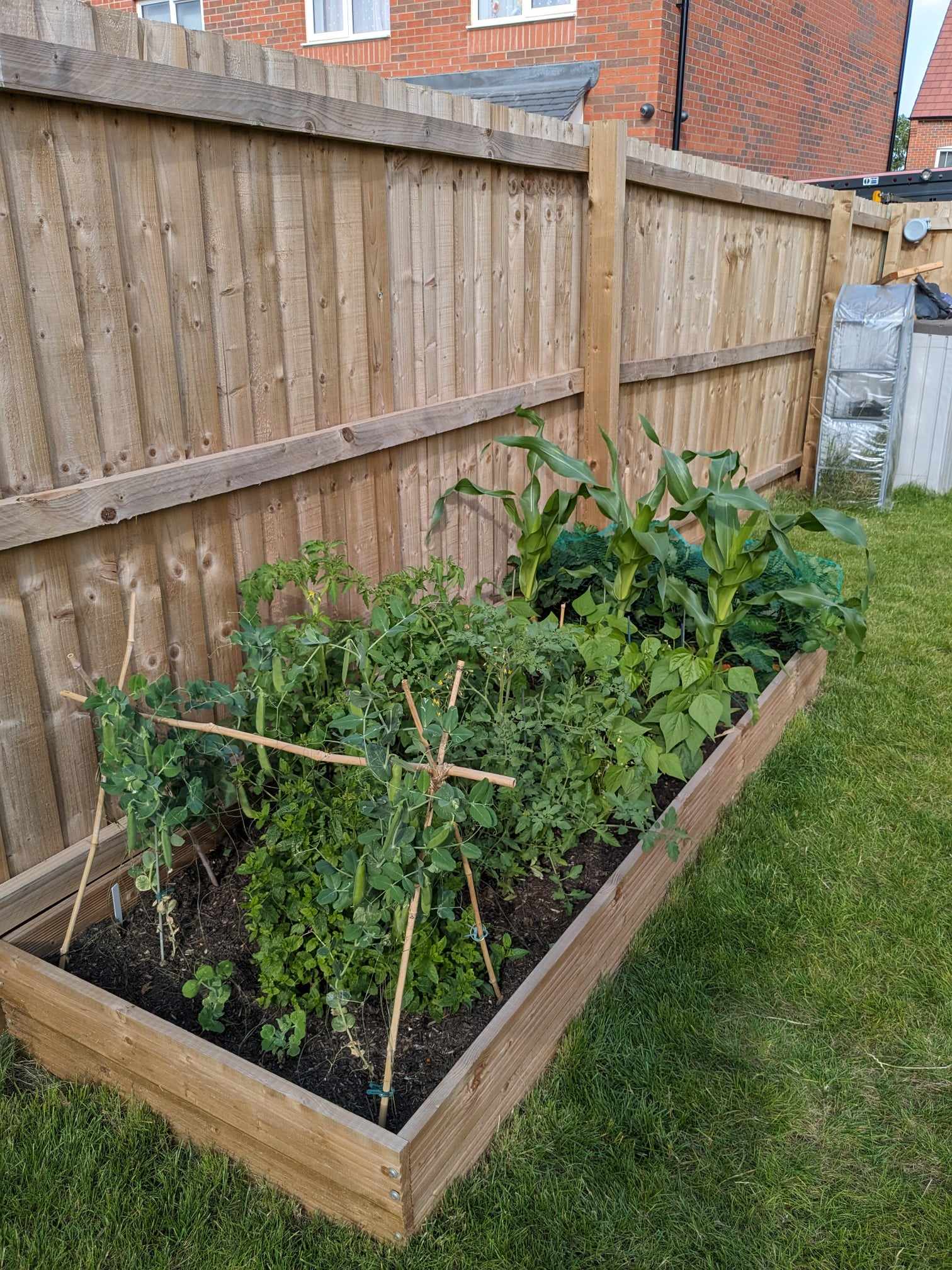
You go to the supermarket in March and find one punnet of tomatoes grown in the UK next to one from Morocco. The homegrown ones have to be the more sustainable choice than the import, right?
Even this decision isn’t simple. Just because something is grown closer to you doesn’t mean it’s the better choice for the planet. Plants that aren’t native to our country or in season at that point are likely grown in energy-intensive greenhouses, or use large amounts of fertiliser to increase production rate.
This is actually in part why there’s been fruit and veg shortages in the UK over the past couple of years – severe climate abroad may have affected our import supply, but the energy price hikes affected British farmers, who wouldn’t have been able to recoup the additional spends on heating greenhouses. To avoid this, they planted fewer foods like tomatoes that rely on greenhouses here.
We can make more informed decisions on this if we learn about food seasonality and make meals based on our local food calendar. Growing your own in-season veg (without heat lamps) or trying to opt for produce sailed in rather than flown in from their native countries is actually a better option than greenhouse-grown food from the UK.
You can find out more about food seasonality and its carbon footprint in my other post.
7. MSG isn’t evil
Despite over a hundred years of use prior, MSG was shitcanned in the 60s as the reason some Chinese food made one man ill.
That’s literally it.
Things spiralled, and before you know it, every product under the sun now boasts its lack of MSG. But what is MSG?
Monosodium glutamate is the salt of glutamic acid, which is an amino acid found naturally both in our bodies to help create protein, and in several common vegetables like mushrooms and tomatoes. It’s pretty flavourless on its own, but enhances the natural flavours of other foods, like salt does.
However, unlike salt, MSG contains two-thirds less sodium than the typical salt we put in our food, so it could help with the reduction of sodium levels in processed foods.
Despite many believing otherwise, MSG has not been proven to cause side effects or health risks. I personally think the abbreviation scares people. It sounds too unnatural – how many other foods are just reduced to capital letters? To the ignorant, it gives visions of hardcore drugs swirling in our sweet and sour chicken.
8. Crispy seaweed is a lie
Like me, you may be someone whose mouth waters at the thought of the salty, yet sweet crispy seaweed in your Chinese takeaway. Well… I’m sorry, but it’s not actually seaweed. It just looks a lot like it.
It’s often made with spring greens or kale, a bit of salt and brown sugar. Although it may not be what it says on the tin, it’s a relatively harmless white lie. It still tastes damn good – only now you know you can make it at home in five minutes.
So that’s eight truths about the UK food industry you may now be mildly angry or upset by.
It’s quite difficult to research food legislation loopholes (they don’t exactly advertise them), so there’s bound to be other dodgy or unexpected stories out there about what we eat. Have you come across any others? Drop them in the comments below to make me mildly miserable!
 Ecoetry
One thought on “8 things you probably didn’t know about food in the UK”